The Triborough Bridge rehabilitation project showcases the transformative impact of precast bridge deck replacement, enabling a full deck upgrade with minimal traffic disruption in one of New York City’s busiest corridors.
Project Details
- Owner: MTA Bridges & Tunnels
- Contractor: Perini Corporation
- Contractor’s Engineer: HNTB
- Designer: Steinman, Boynton, Gronquist & Birdsall Consulting Engineers
Project Overview
The Triborough Bridge (now the RFK Bridge) is a critical New York City crossing linking Manhattan, Queens, and the Bronx.
Originally built in 1937, the bridge serves as a vital connection for more than 200,000 vehicles per day. By the early 2000s, its roadway decks had reached the end of their service life and required a full replacement. To complete the work without causing significant traffic disruption, the project strategy centered on precast bridge deck replacement.
The owner required at least seven of the bridge’s eight lanes to remain open during construction, setting a high bar for project planning. To meet this challenge, the contractor deployed an accelerated bridge construction approach, leveraging precast concrete deck units supplied by Fort Miller to streamline installation and maintain traffic flow.
Scope and Details
To replace the deck without major closures, the project team employed innovative installation methods.
Using the Inverset prefabricated bridge system, large sections of bridge superstructure could be built off-site and installed rapidly on the existing supports. Fort Miller fabricated over 500 Inverset units as part of the larger bridge rehabilitation, including a core set of 254 precast deck units covering roughly 144,000 square feet.
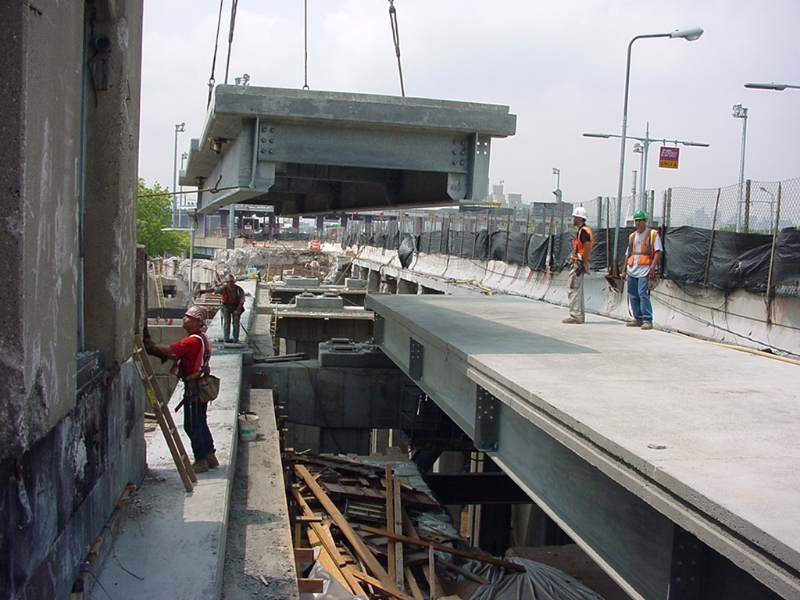
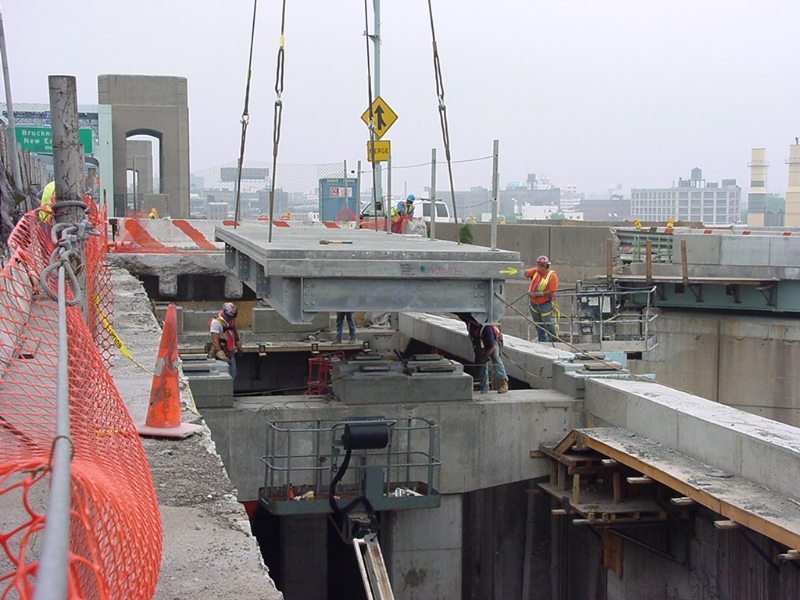
Each unit was composed of a full-depth precast concrete deck integrally cast with structural steel girders, allowing the new superstructure to be set in place as a single, composite element.
Fort Miller’s in-house engineering customized the precast units to match the complex geometry of the existing bridge. Many panels had unique shapes or tapers, and some even interlocked (framed) into each other to accommodate crossovers and ramp merges. This adaptability of the precast system allowed the new deck to seamlessly fit the old substructure and maintain the bridge’s original alignment.
By fabricating these precast concrete deck units in a controlled environment, Fort Miller ensured consistent quality and durability, reducing the variability often found in field-placed concrete.
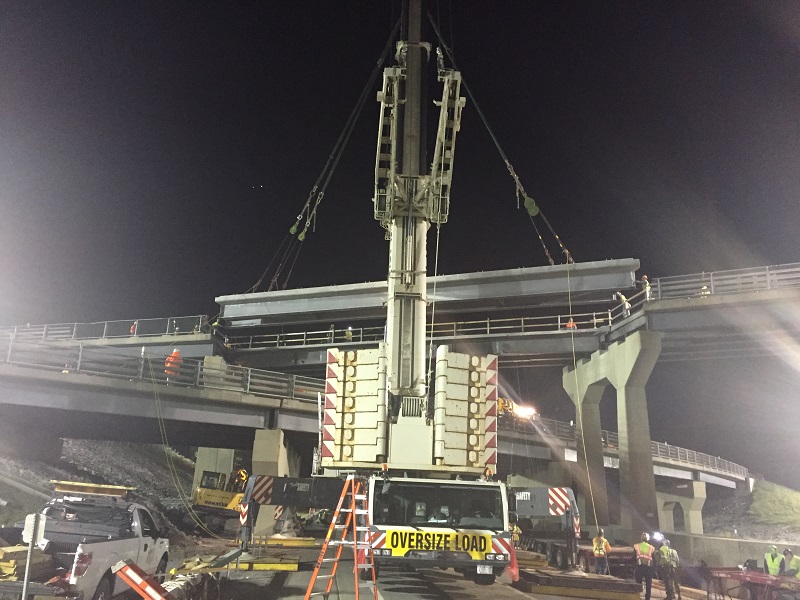
Installation took place during nighttime and off-peak windows to limit the impact on traffic. On long spans, overhead gantry cranes were used to lift the units into place from above the bridge deck, enabling simultaneous work on multiple lanes without obstructing active travel lanes.
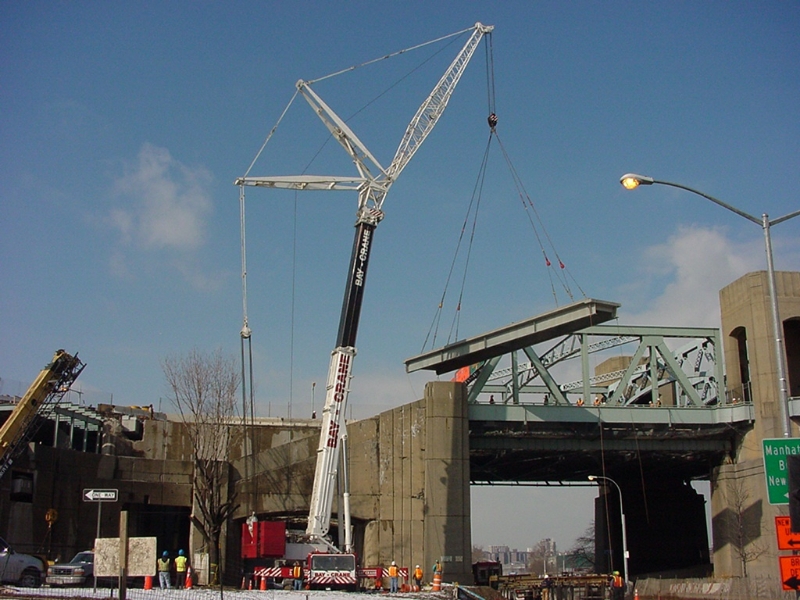
In other areas, cranes operating from below the bridge allowed for the same rapid installation without affecting roadway operations. At peak efficiency, crews placed up to 15 precast bridge deck units per shift, significantly accelerating the construction timeline and eliminating the need for long-term lane closures.
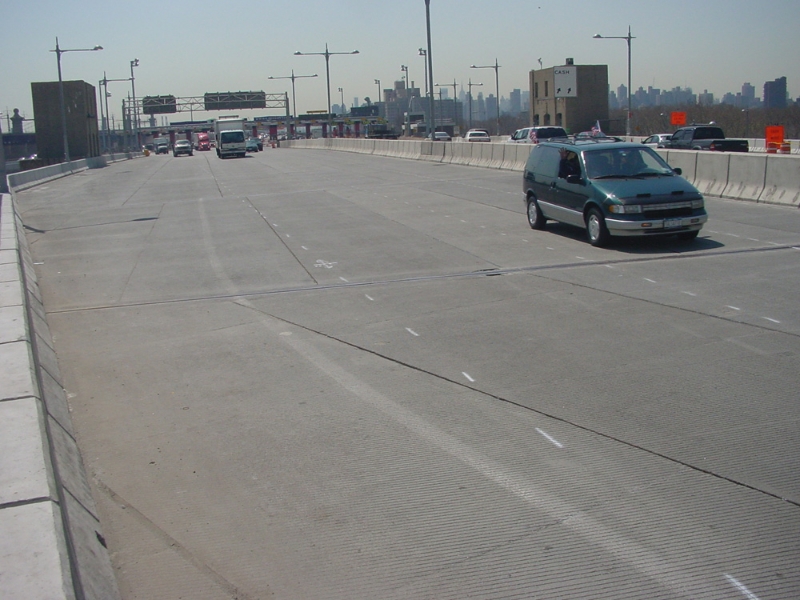
By relying on prefabricated components and thoughtful staging, the project team successfully kept seven traffic lanes open throughout construction, a feat rarely achieved on a bridge of this size and complexity.
Impact and Innovation
This project serves as a benchmark for precast bridge deck replacement in urban infrastructure. Fort Miller’s precast system enabled faster construction and delivered a safer, higher-quality result with less disruption to the public.
Precasting the deck panels off-site allowed for far greater control over quality and schedule, while reducing on-site labor and improving safety for workers. The ability to install large deck units without the need for extensive formwork, curing time, or phased pours kept one of the city’s busiest bridges operating throughout the project.
Perhaps most impressively, the accelerated construction method allowed the team to complete the project approximately one year ahead of schedule, creating direct cost savings and indirect economic benefits through preserved toll revenues and uninterrupted travel.
The combination of innovative installation techniques and precision-engineered components showcased the power of accelerated bridge construction, setting a new precedent for large-scale transportation projects in congested environments.