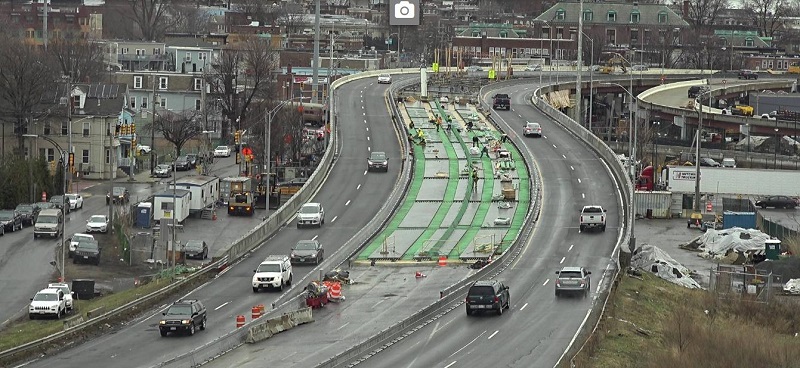
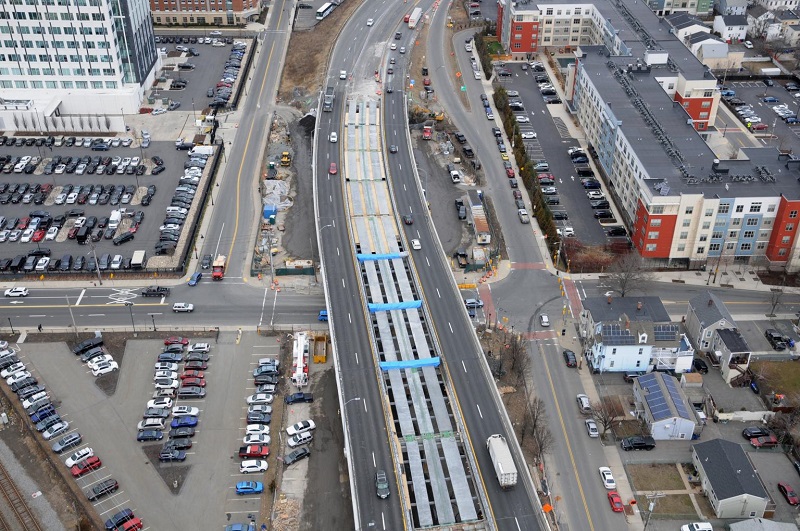
Fort Miller’s modular bridge superstructure rebuilt MassDOT’s Chelsea Viaduct on U.S. Route 1 with ABC speed: 313 precast units installed at night to keep traffic moving.
MassDOT Chelsea Viaduct
Chelsea, MA
Project Details
- Owner: Massachusetts Department of Transportation (MassDOT)
- Contractor: Skanska McCourt JV
- Design Engineer / Engineer of Record: HNTB/MassDOT
- Completion Date: 2020
- Scope: 313 Prefabricated Bridge Units, 198 Deck Panels
Project Overview
Built in the 1950s, the Chelsea Viaduct is an elevated highway structure with 75+ spans over local streets and a commuter rail line just north of Boston, MA. Carrying roughly 63,000 vehicles per day, the viaduct serves as a critical link between the city and its northern suburbs, including the town of Chelsea.
By 2018, the viaduct’s structure had seriously deteriorated. Its steel beams and deck were in poor condition, contributing to congestion and safety concerns. The Massachusetts Department of Transportation (MassDOT) initiated a fast-track rehabilitation project to address structural deficiencies and extend the viaduct’s lifespan, an approach built around modular bridge superstructure solutions from Fort Miller.
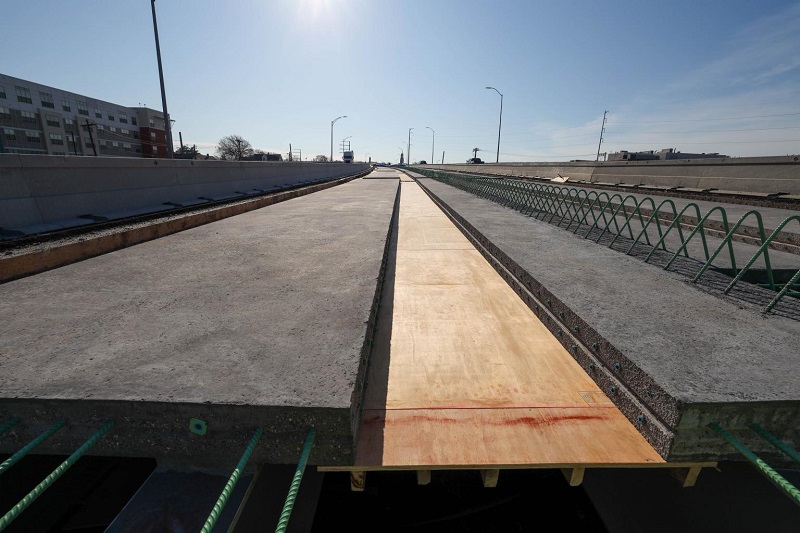
Our team fabricated and delivered 313 steel-girder precast deck units and 198 concrete-filled steel grid deck panels to rebuild the elevated highway during off-peak and night windows.
The result: a smooth new ride delivered on an aggressive schedule, with minimal peak-hour disruption to commuters.
Scope and Details
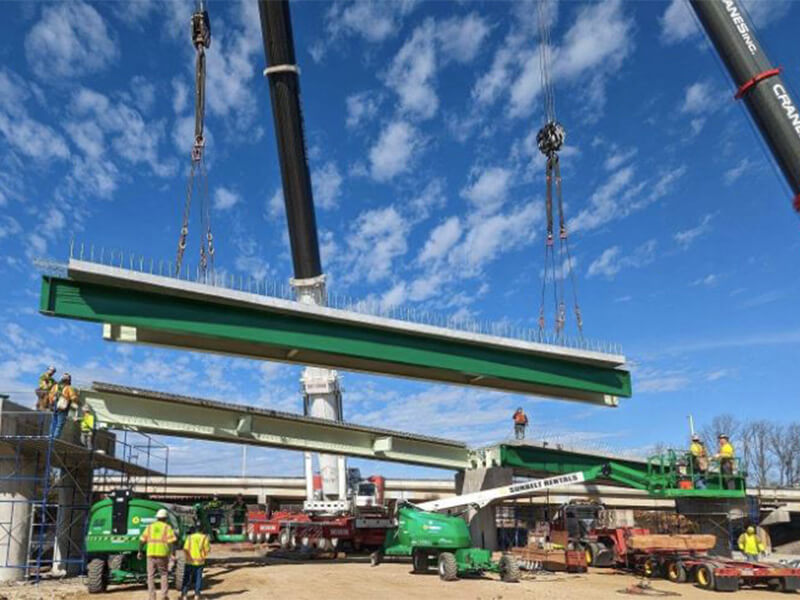
The design introduced prefabricated bridge units and “sister” support beams to expedite construction.
Fort Miller’s scope centered on these precision-made, field-ready PBUs and deck panels. We fabricated and delivered a modular bridge superstructure kit at an urban scale. Units ranged from 20 to 85 feet, each produced under factory controls to hold geometry across curves, cambers, and superelevations. Where full units weren’t optimal, precast deck panels preserved the project’s accelerated rhythm.
Construction crews staged the panels just off-site for on-time deliveries along this constrained jobsite. The modular strategy not only reduced traffic disruption but also compressed on-site work and reduced the risk to traffic and rail lines.
Maintaining traffic flow on this vital route during construction was one of the biggest challenges, as MassDOT’s contract mandated that there be no peak-hour lane closures on Route 1 during the majority of construction.
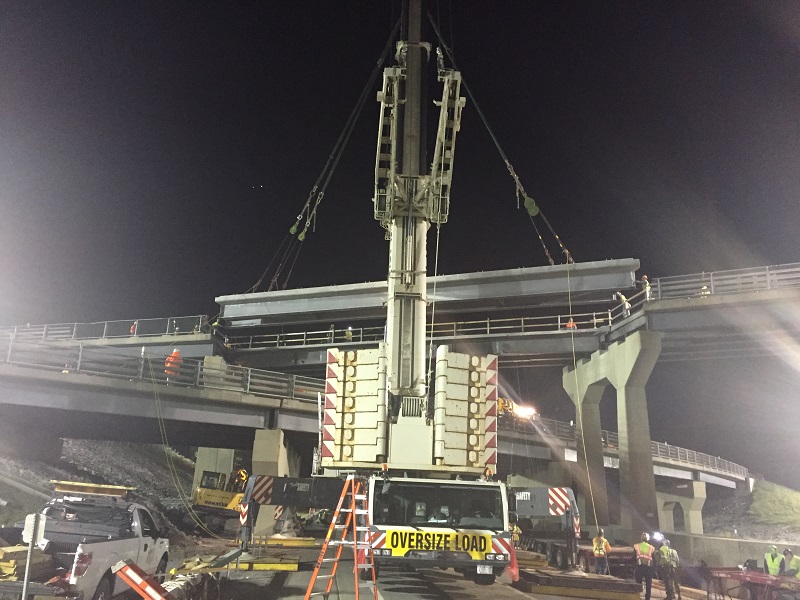
Traffic was kept moving by temporarily reconfiguring lanes; generally, three lanes were reduced to two in each direction, with any necessary single-lane or ramp closures confined to off-peak times. The most disruptive tasks (such as installing large prefabricated spans over the roadway) were performed during overnight or weekend shutdown windows that were widely publicized in advance.
After placement, longitudinal and transverse closure pours unified the deck, while the fascia and median barriers were cast in place to complete the profile. A membrane waterproofing system and asphalt overlay locked in durability and ride quality.
Impact and Innovation
The project is a showcase for how modular bridge superstructures can transform urban rehabilitation.
Factory-controlled fabrication delivered uniform geometry and fit-up, which in turn accelerated field production and reduced worker exposure over live traffic and rail. The modular superstructure also meshed cleanly with MassDOT’s substructure strategy, so strengthening could advance in parallel while the existing deck carried traffic. This compressed the overall schedule and limited full closures to short, well-communicated windows.
Beyond construction speed, the approach improved long-term performance. Tightly controlled tolerances and high-quality concrete finishes simplified the closure pours and produced a monolithic deck ready for waterproofing, cutting down future maintenance and improving ride.
Community impacts were kept low thanks to off-peak installations, limited lane closures, and targeted detours. Industry recognition followed for delivery excellence and staging ingenuity, reinforcing Fort Miller’s role as a partner of choice for MassDOT bridge rehabilitation, where safety, schedule, and quality must all win at once.
Featured Bridge Projects
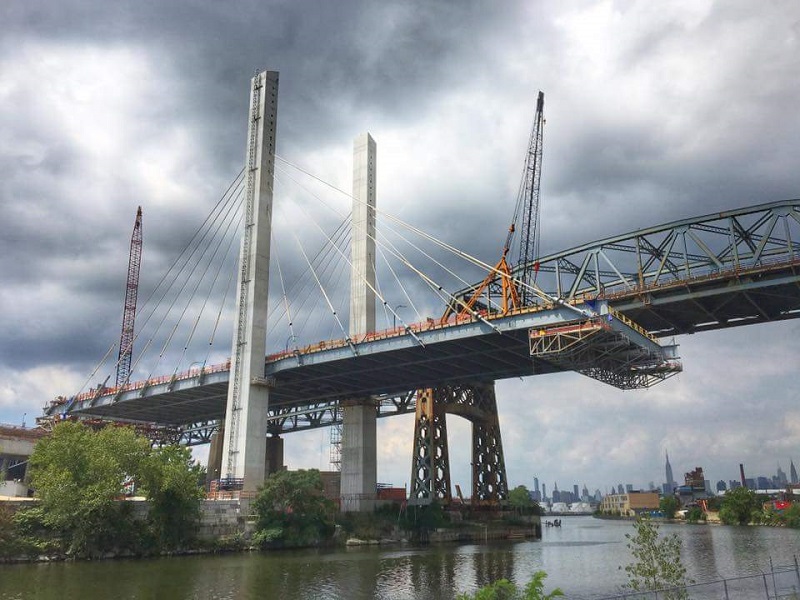
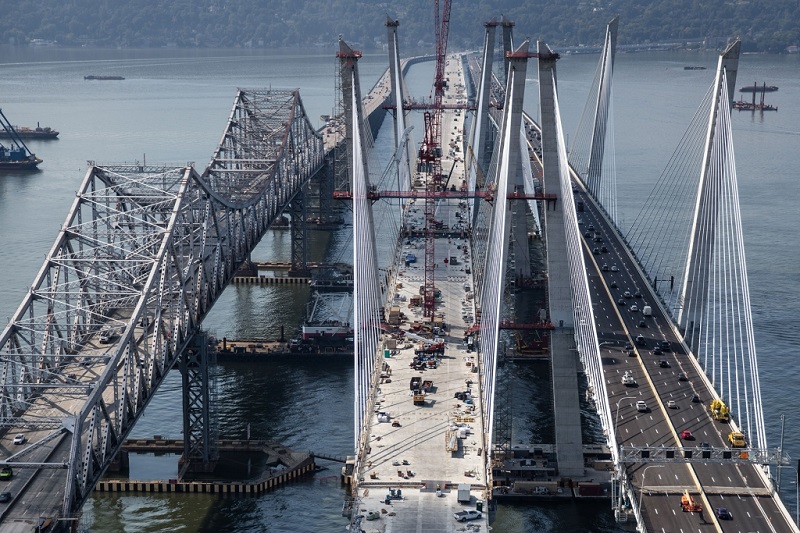
We have participated in some of the most celebrated bridge projects in recent memory, including the Alexander Hamilton Bridge/Highbridge Interchange, the Kosciuszko Bridge over Newtown Creek in Brooklyn-Queens, New York City, and the replacement of the Tappan Zee Bridge over the lower Hudson River.