
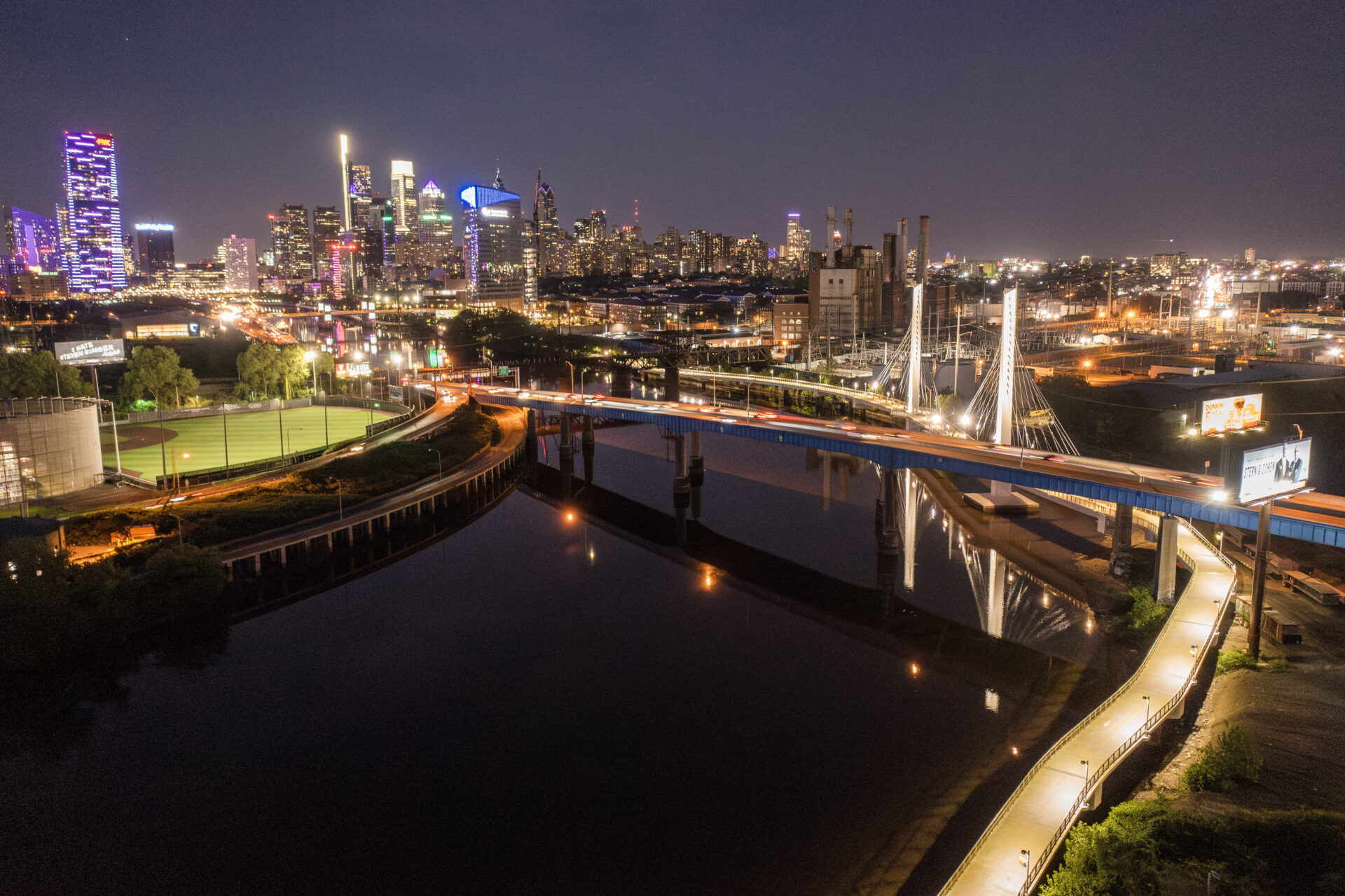
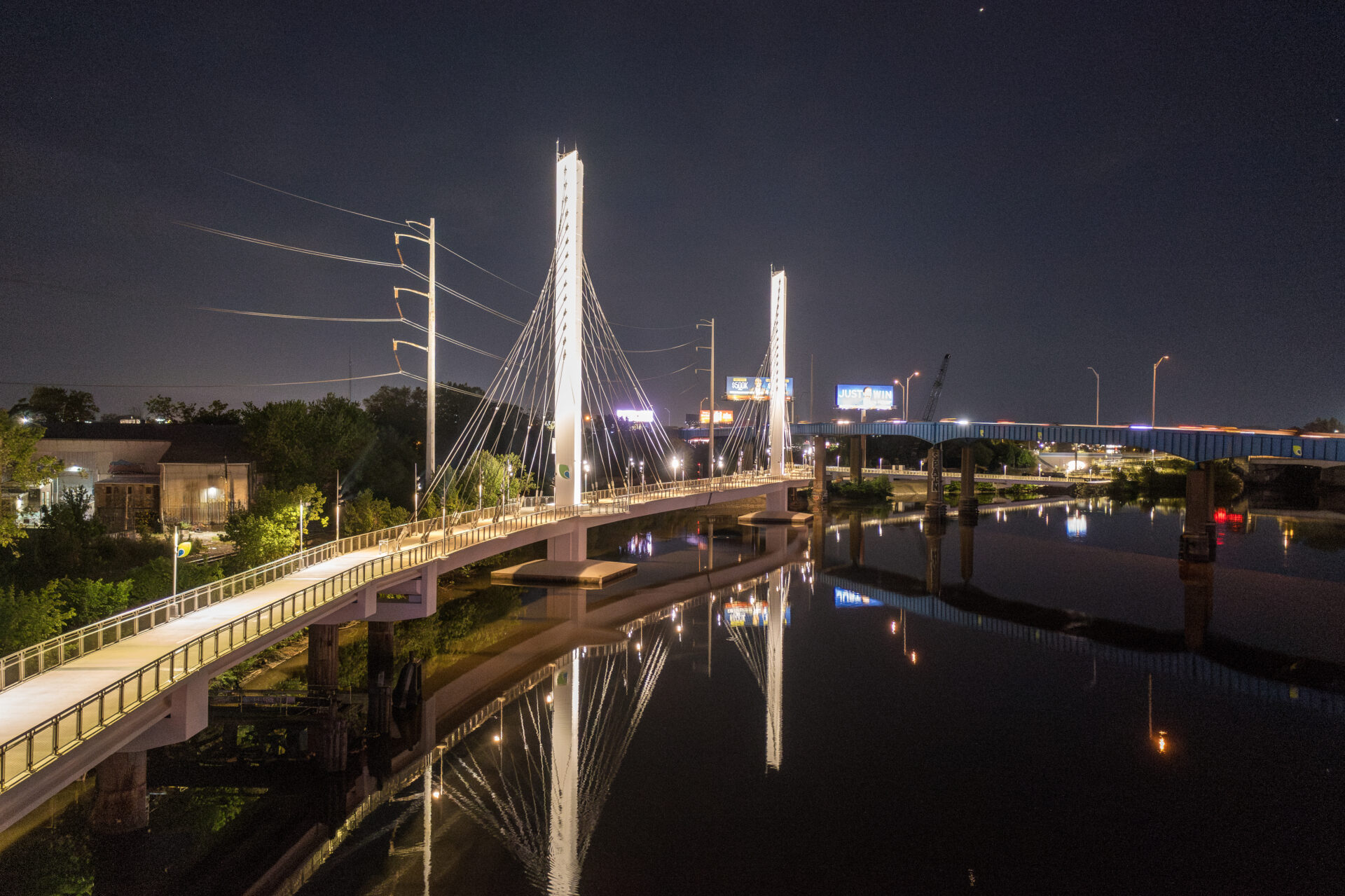
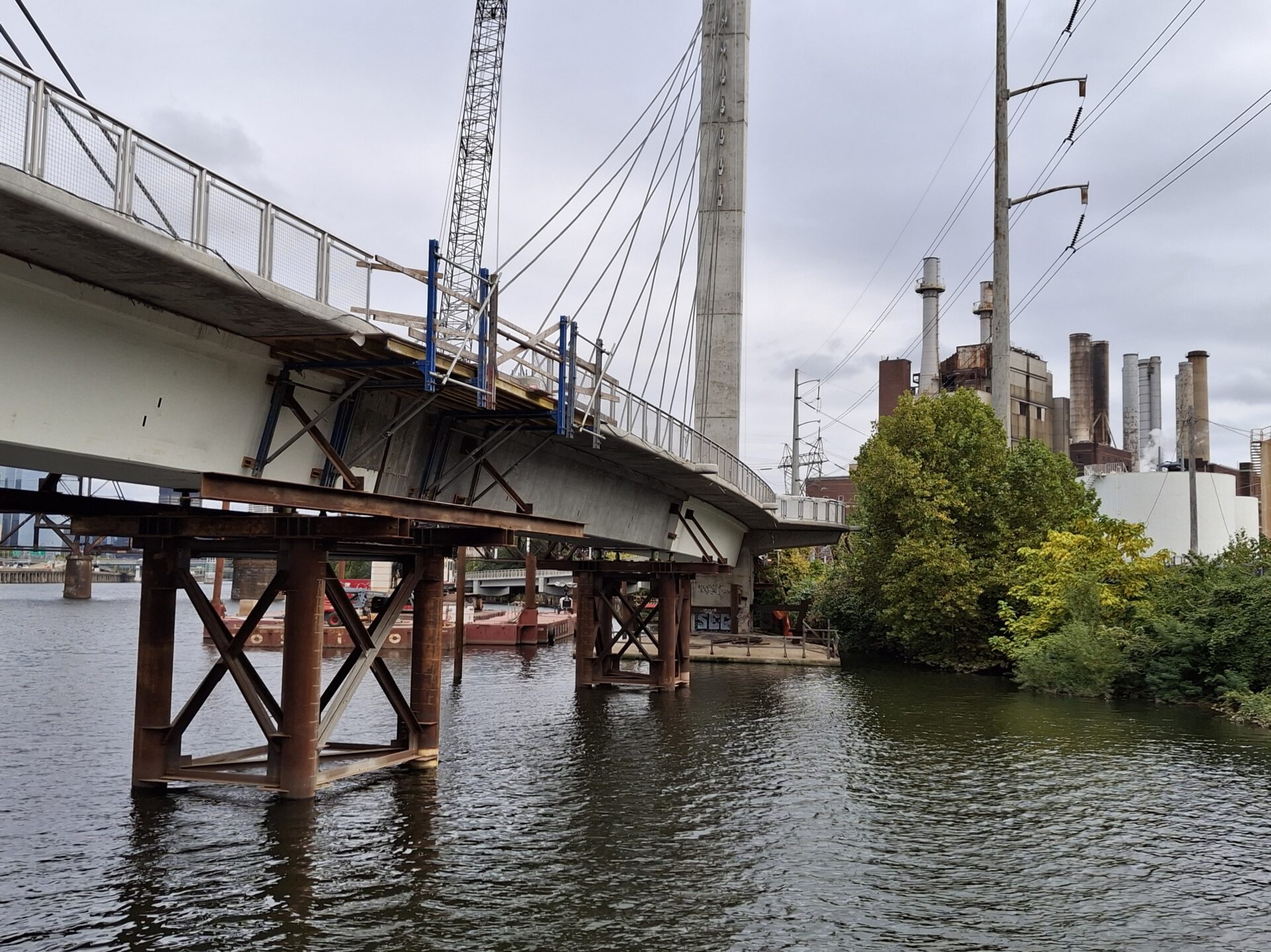
The Christian to Crescent Cable-Stayed Bridge completes a critical link in Philadelphia’s Schuylkill Banks trail network, using curved precast concrete girders and precast deck systems to accelerate construction and deliver long-term durability.
Philadelphia’s Christian to Crescent Cable-Stayed Bridge
Project Details
- Owner: City of Philadelphia/Schuylkill River Development Corporation
- Contractor: PKF – MARK III Inc.,
- Project Completion: 2025
- Scope: Eight curved precast concrete tub girders
Project Overview
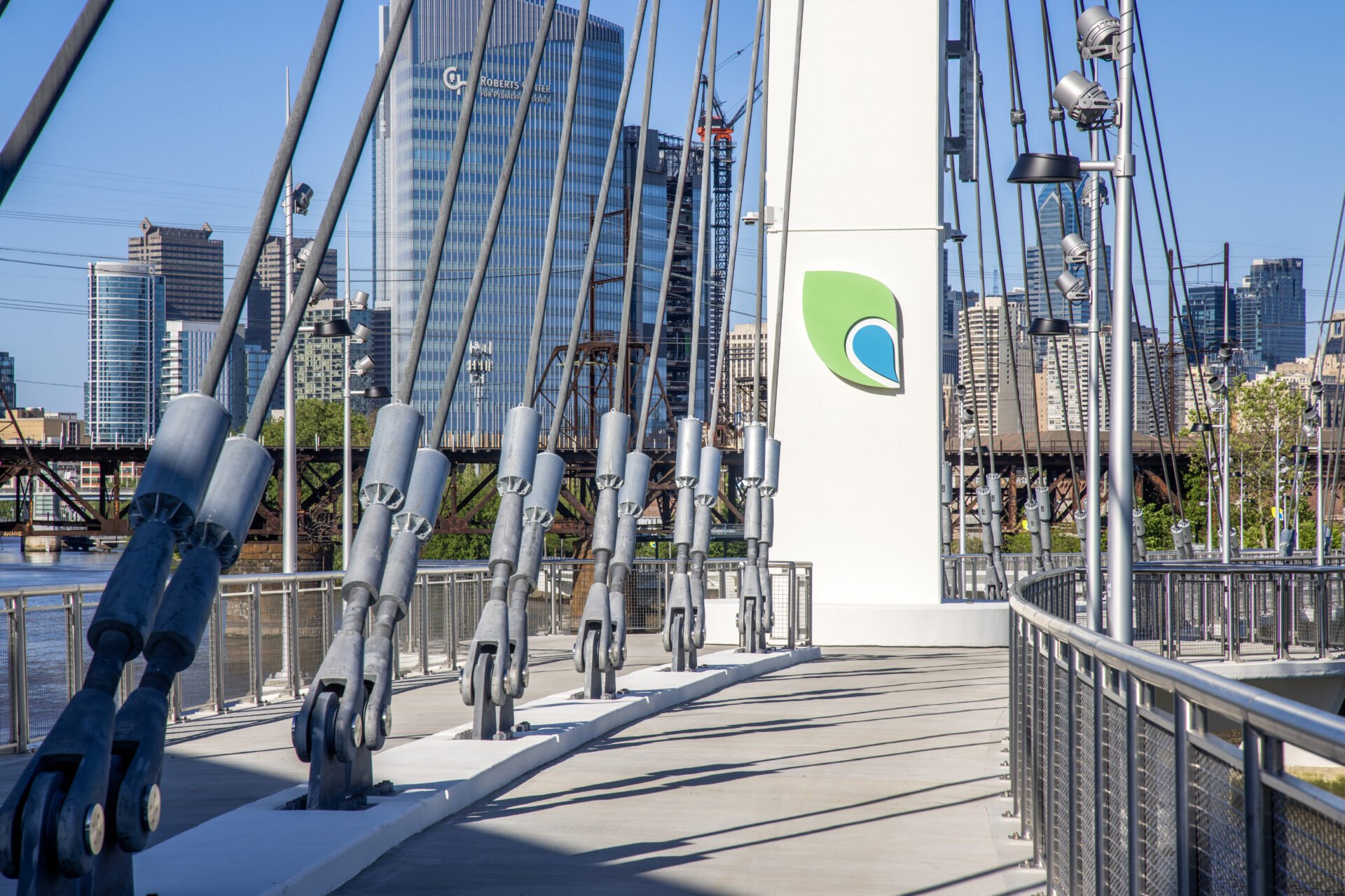
Built to close a long-standing gap in Philadelphia’s Schuylkill River Trail network, the Christian to Crescent project delivers an entirely off-road link for pedestrians and cyclists. Connecting the Center City and Grays Ferry neighborhoods to the waterfront and each other, the bridge also supports healthier, more sustainable ways of getting around the city.
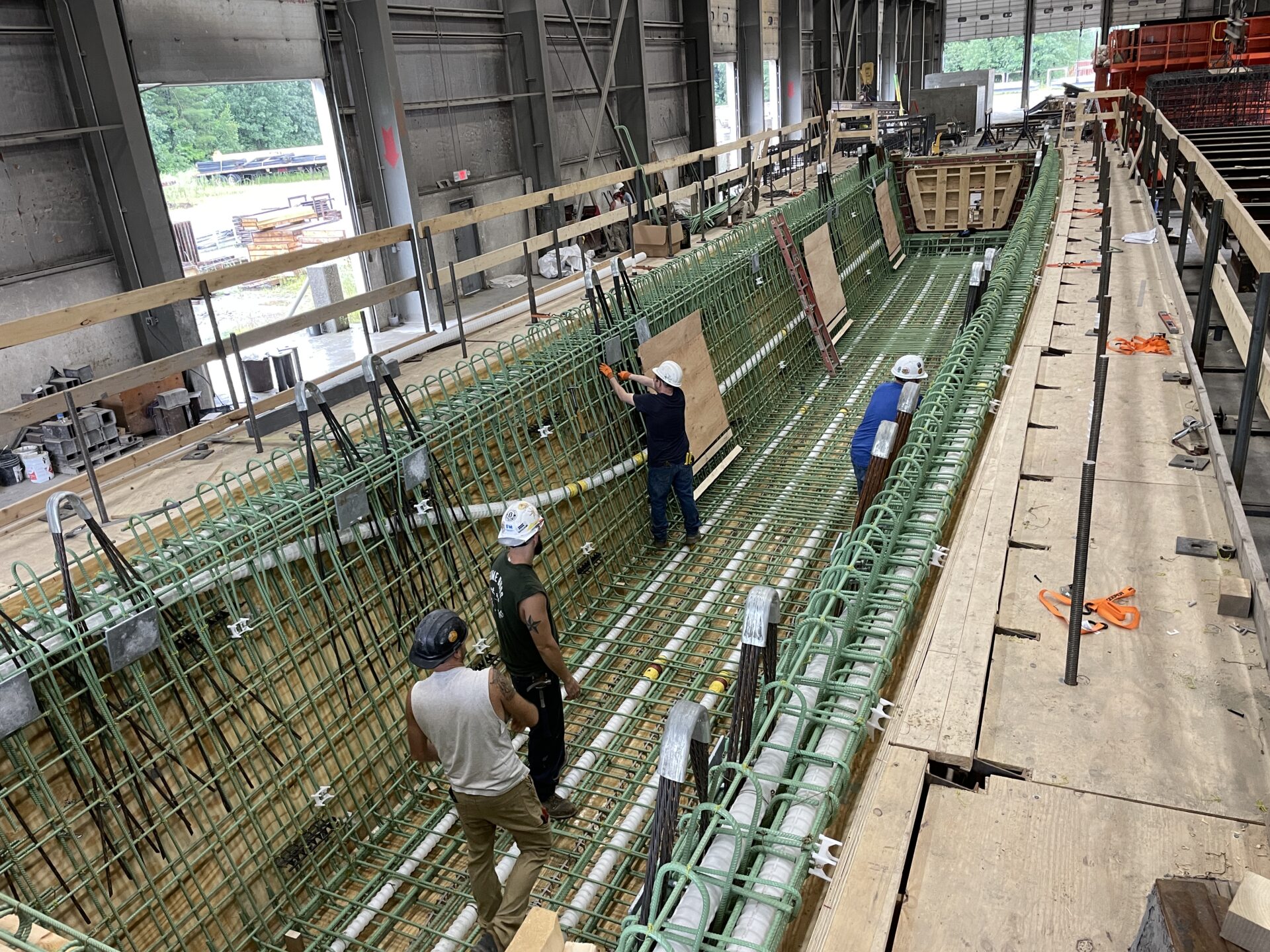
Fort Miller served as the PCI-certified precast concrete producer, supplying precision-fabricated components, including complex, curved precast concrete girders. This helped the team maintain tight geometry control, compress the on-site schedule, and minimize time over the Schuylkill River and active rail infrastructure.
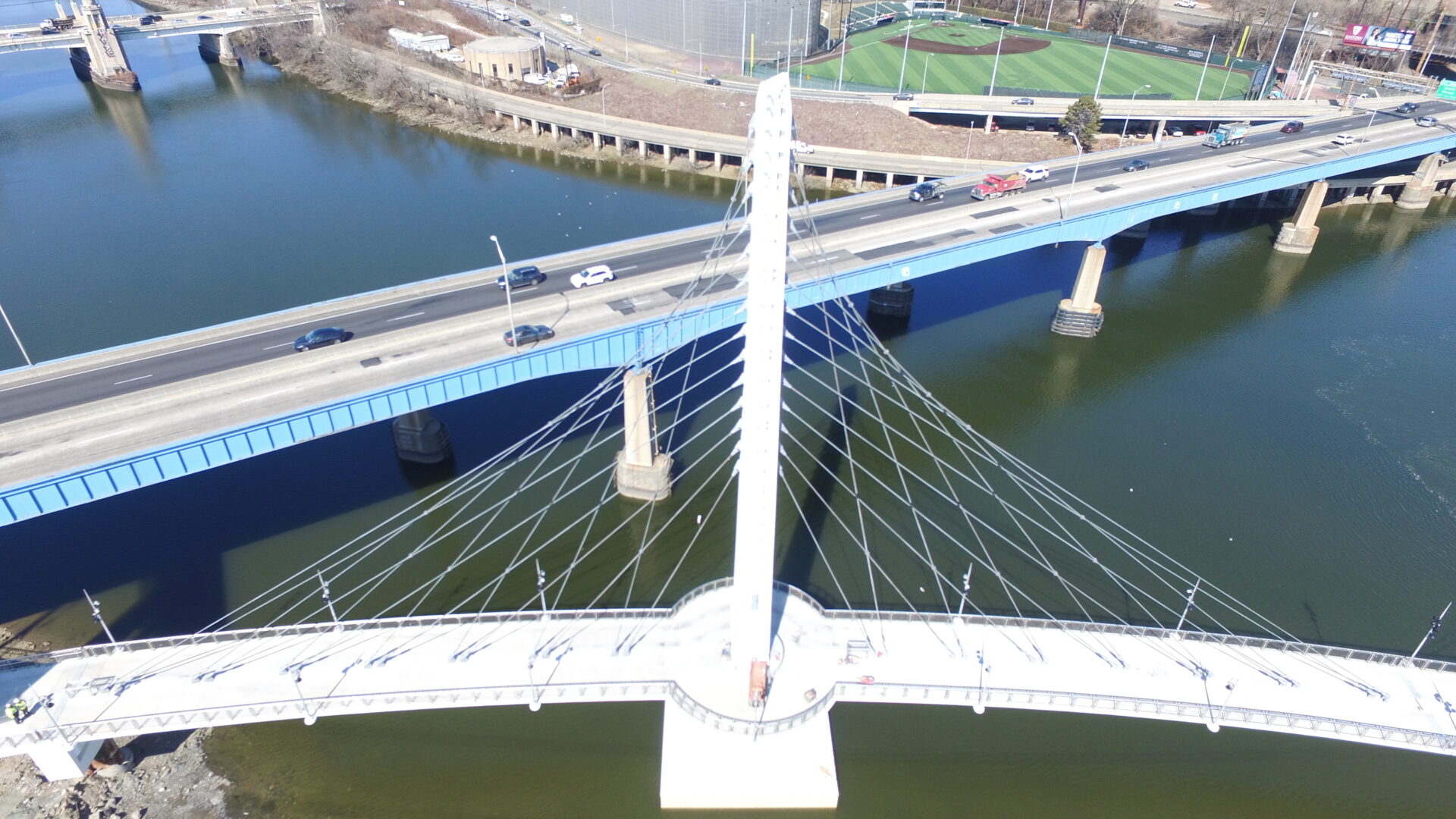
The result is a striking 650-foot-long cable-stayed landmark built for durability, aesthetics, and long-term performance.
Scope and Details
Fort Miller’s role was central to making the bridge come to life.
According to Trevor Kirkpatrick, senior bridge engineer for AECOM, alternative materials were considered for the work, but none could match the benefits of precast concrete.
“A major project goal was to provide a maintenance-free structure for the city,” he says. “Precast concrete had significant benefits over a similar steel structure from a maintenance and painting perspective. Using precast elements rather than cast-in-place simplified the overall bridge geometry control and placed beam fabrication on a parallel construction timeline, allowing for concurrent construction activities.”
The precast scope includes custom curved U girders, bulb tees, and precast deck slabs forming the approach system and deck components. These prefabricated elements simplified logistics in a constrained urban work zone and helped limit disruption around the river and adjacent infrastructure.
For the primary structure, the project team used curved precast elements at a level that’s rarely attempted. PCI notes that the bridge features the only curved, spliced precast concrete post-tensioned U beams in a single-box configuration with cable-stayed support, selected in part for the torsional rigidity required by the bridge’s cable arrangement.
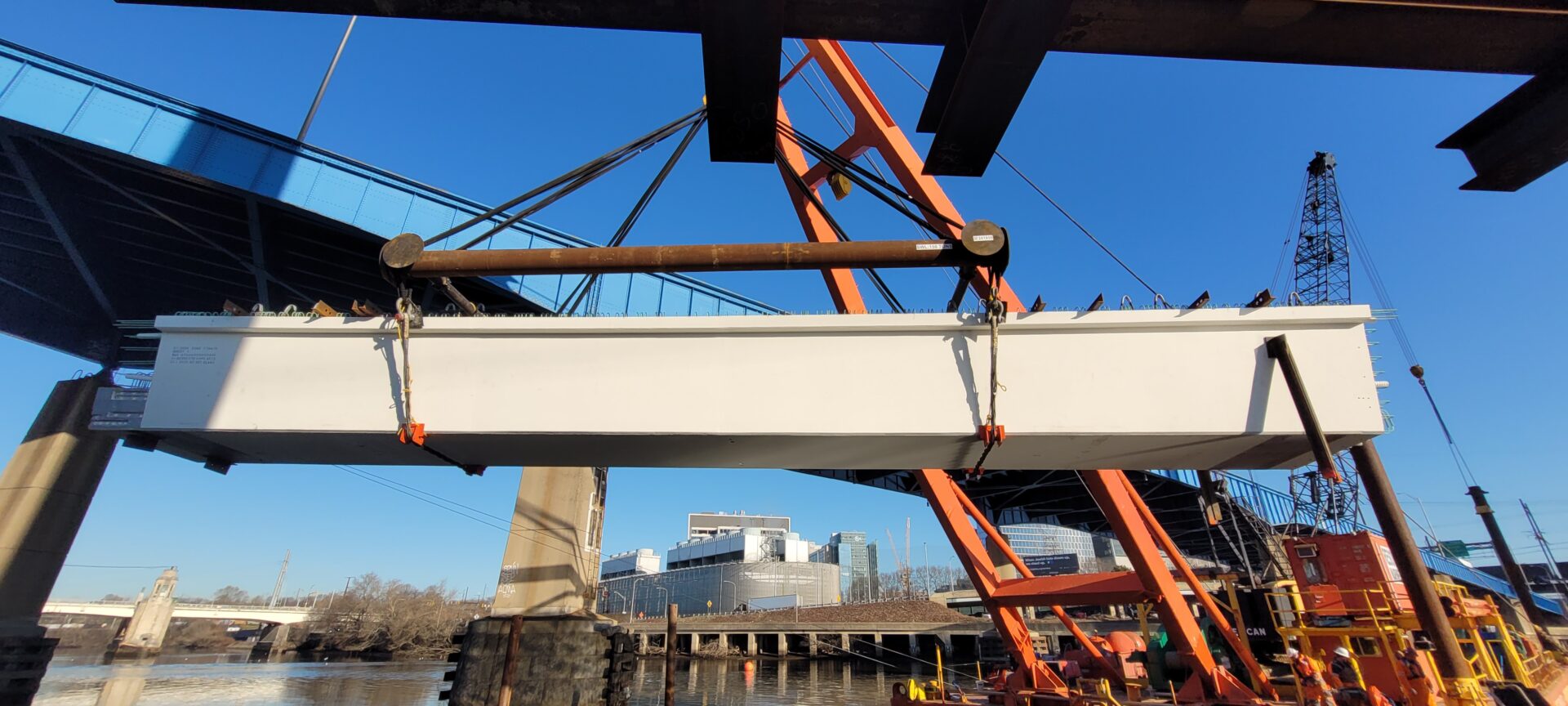
Production scale mattered, too. The work included eight curved precast concrete tub girders, each roughly 73 to 80 feet long and weighing 116 to 148 tons.
While the overall project spanned several years, precast erection took just two weeks, sharply reducing the duration of high-impact work in the corridor.
Impact and Innovation
Though the Christian to Crescent Bridge is now a city landmark, it’s also a practical piece of transportation infrastructure. It closes a long-standing gap in Philadelphia’s multi-use trail network and creates a safer route for everyday trips on foot and by bike.
The project pairs a distinctive cable-stayed form with a precast strategy that supports precision fabrication, accelerated installation, and long-life performance.
That combination is exactly what the PCI Design Awards recognized with both a Structural Innovation honor and a top transportation award in its span category.

Resources & Downloads
Access our product resources and downloads for comprehensive information on our offerings.
Featured Bridge Projects
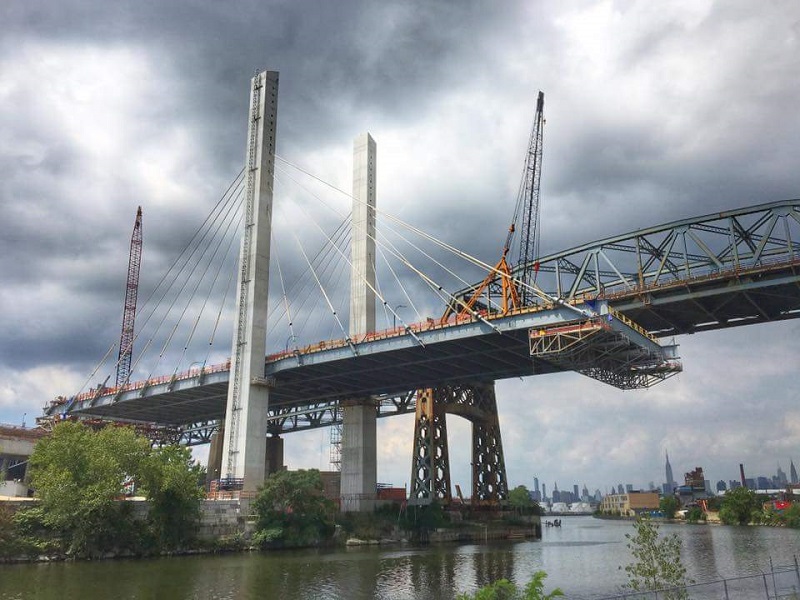
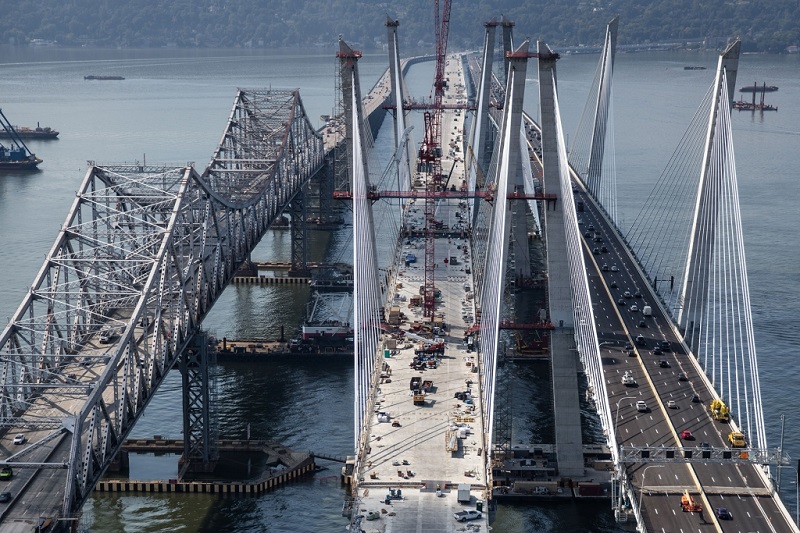
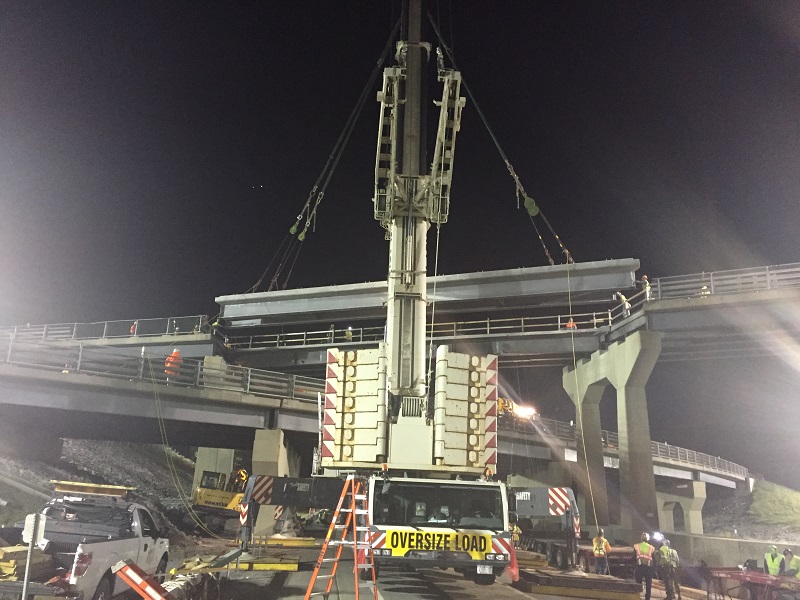
We have participated in some of the most celebrated bridge projects in recent memory, including the Alexander Hamilton Bridge/Highbridge Interchange, the Kosciuszko Bridge over Newtown Creek in Brooklyn-Queens, New York City, and the replacement of the Tappan Zee Bridge over the lower Hudson River.