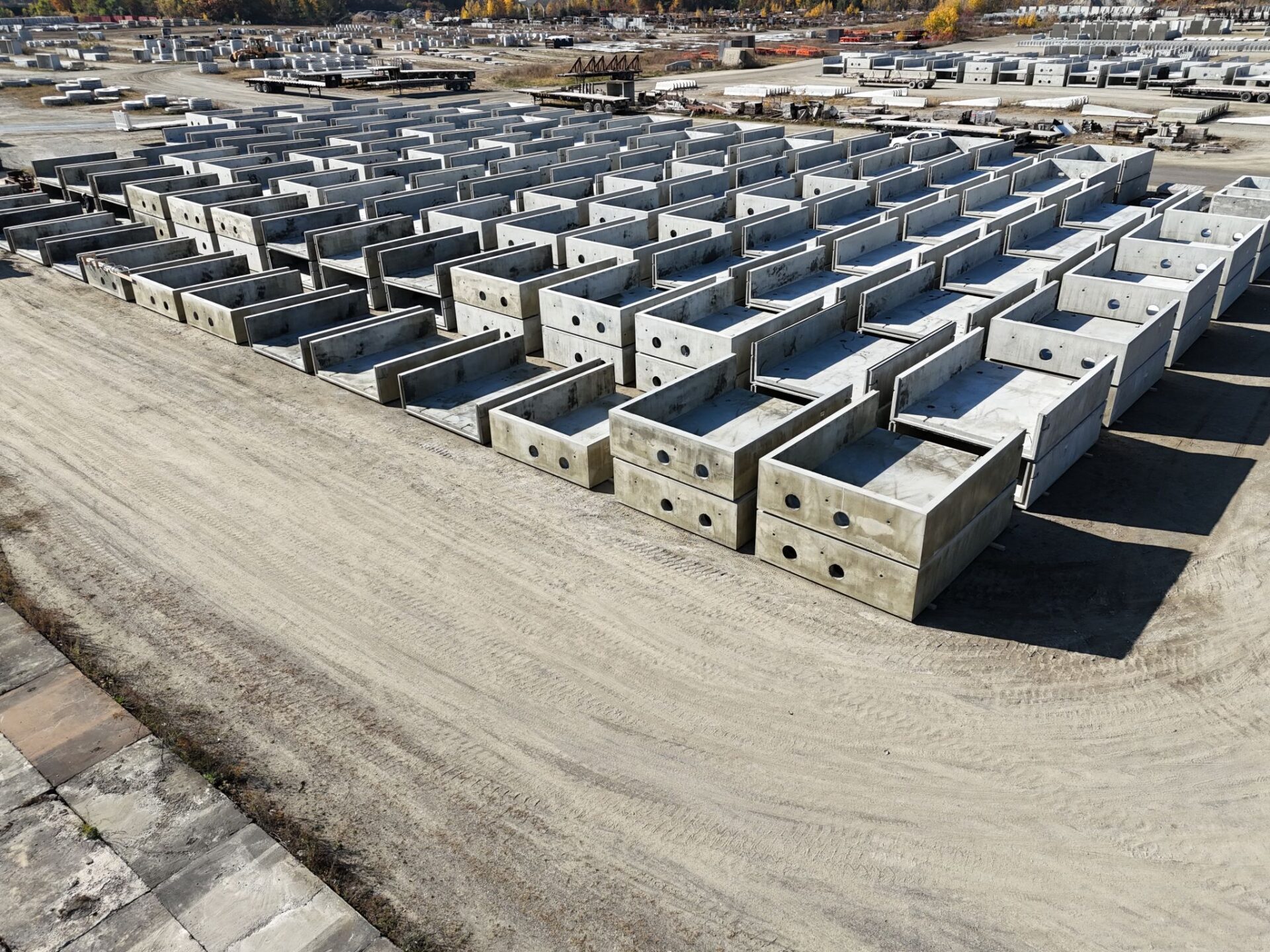

Bridges have always been a symbol of human ingenuity, connecting communities and overcoming geographical obstacles. In recent years, the field of bridge design has continued to grow, experiencing yet another transformative shift toward sustainability, efficiency, and innovation. One remarkable advancement in this realm is the use of precast concrete products, revolutionizing the way we build bridges.
Precast Concrete Bridges: A Brief Overview
Incorporating precast concrete is a cutting-edge trend that combines efficiency, durability, and design flexibility in all kinds of construction, making it a preferred choice for modern infrastructure projects. As a result, precast concrete technology has become popular in bridge design, particularly due to its numerous benefits, including rapid construction, reduced downtime, durability, longevity, and the ability to create innovative bridge designs.
Rapid Construction and Reduced Downtime
One unique element and incredible benefit of using precast concrete for bridge projects is the prefabrication process, which allows for rapid construction and reduced downtime. In fact, prefabricating precast concrete components offsite in controlled conditions provides several distinct benefits, including:
- Simultaneous on-site preparation, which reduces construction time significantly compared to traditional cast-in-place methods.
- Safe and quick transportation to the construction site, minimizing disruption to traffic and nearby communities.
- Weather independence from manufacturing components indoors, leading to a project schedule that is less affected by adverse weather, ensuring timely completion.
Durability and Longevity
The controlled environment that goes along with the prefabrication process produces additional benefits related to working with precast concrete in bridge projects in the form of durability and longevity. Each piece is guaranteed to be of high quality because precast concrete components are produced under strict quality control measures in factory conditions.
The manufacturing process and components used in the prefabrication process also contribute to better resistance to environmental factors. As a result, precast concrete is known for its resistance to corrosion, abrasion, and chemical exposure, and this resistance enhances the longevity of the bridge structure that uses precast concrete components, which has the additional benefit of reducing maintenance costs over time.
Innovative Bridge Designs
The space and technology used inside precast concrete manufacturing facilities may seem very clinical, but instead, they create the perfect environment for architectural freedom. Precast concrete allows for a range of shapes, textures, and finishes, and through the controlled manufacturing process, architects and designers have the flexibility to create aesthetically pleasing and innovative bridge designs that may not be easily achievable with traditional construction methods.
Fort Miller Precast Bridge Project Highlights
Over the years, several Fort Miller Precast projects successfully blended cutting-edge architectural design and modern technology in the form of precast concrete structures. In each of these Fort Miller bridge projects, which includes some of the most famous modern bridges in New York, the incorporation of precast concrete in the bridge’s construction offered clear advantages, from faster construction to minimized traffic disruption and enhanced structural performance.
The ability to manufacture high-quality precast elements in Fort Miller’s offsite, controlled conditions contributed to the overall success of these bridge projects, aligning with the industry’s trend toward efficient and sustainable construction practices.
Alexander Hamilton Bridge
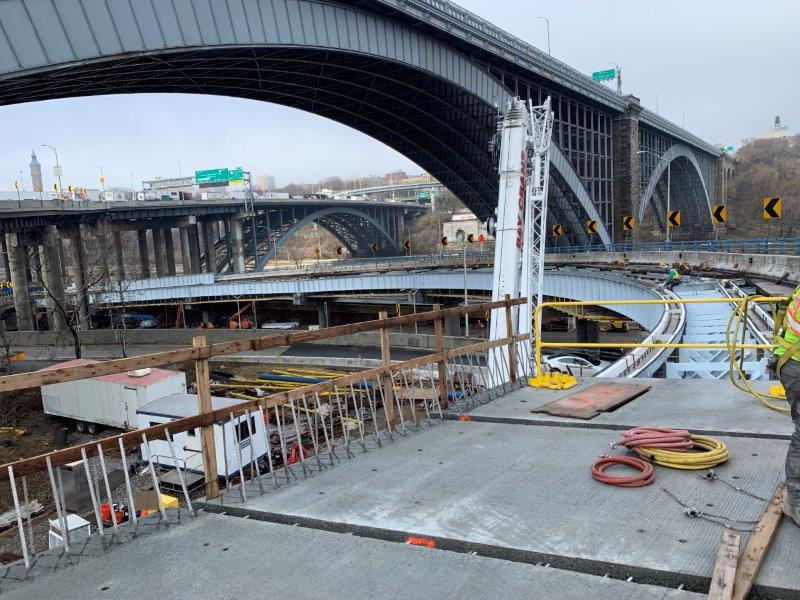
The Alexander Hamilton Bridge/Highbridge Interchange, located in New York City, is a vital transportation link connecting the boroughs of Manhattan and the Bronx. Under a contract with the New York State Department of Transportation (NYSDOT), Region 11, Fort Miller produced 605 precast concrete deck panels for three ramps for the project’s general contractor Posillico Civil Inc. Fort Miller manufactured these units in our Greenwich, NY facility and delivered them to the site via specialized hauling equipment.
Kosciuszko Bridge Replacement

The Kosciuszko Bridge Replacement project in New York (I-278, Brooklyn-Queens Expressway) involved the construction of a new cable-stayed bridge to replace the aging Kosciuszko Bridge. Fort Miller worked with the New York State Department of Transportation and general contractor, Skanska Kiewit ECCO, JV, manufacturing the replacement deck panels and retaining wall for the replacement of the Kosciuszko Bridge.
Precast concrete was extensively utilized in the construction of this bridge, especially in the fabrication of precast segments for the bridge’s towers and spans. In fact, Fort Miller fabricated 284 main span precast concrete bridge deck panels in addition to more than 135,000 square feet of the T-WALL® retaining wall (large block and small block) units with a special vertical ribbed formliner finish. The use of precast components would have contributed to the rapid construction of the bridge, reducing overall project timelines and minimizing disruption to traffic in the area.
Governor Mario M. Cuomo Bridge
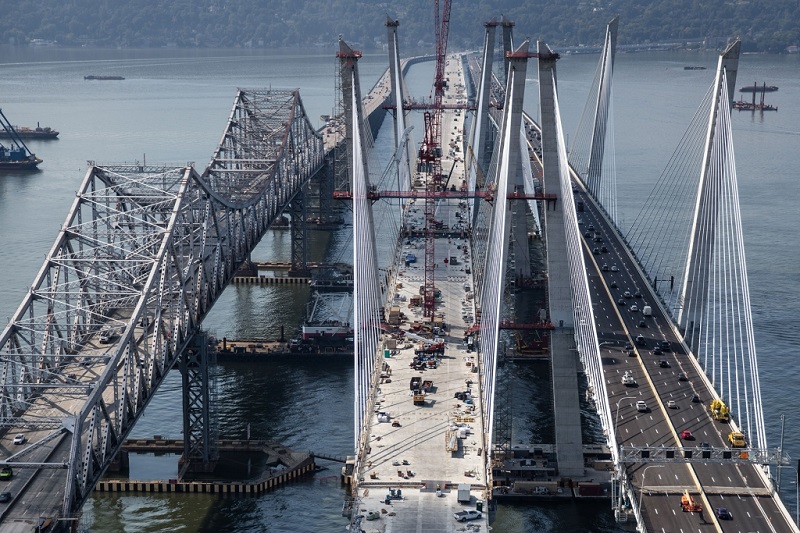
Spanning the Hudson River between Rockland and Westchester counties in New York, the Tappan Zee Bridge, now officially known as the Governor Mario M. Cuomo Bridge, has earned widespread acclaim both nationally and internationally. Serving as a critical link for approximately 140,000 vehicles each day, this bridge plays a vital role in connecting upstate New York with the bustling New York City and Tri-State region. The Governor Mario M. Cuomo Bridge is more than just a transportation artery; it’s a testament to precision, innovation, and unwavering commitment.
As a key contributor to this iconic structure, Fort Miller Precast produced 975 main span bridge deck panels for the new 3.1-mile-long cable-stayed twin bridge with general contractor, Tappan Zee Constructors. Deck panels were manufactured in Fort Miller’s Greenwich, NY, facility and transported via barge to Tarrytown, NY. The precast concrete components used in the bridge construction contributed to the project’s efficiency, allowing for accelerated construction schedules and reduced impact on traffic.
Precast Concrete: The Present and Future of Bridge Design
From the Alexander Hamilton Bridge to the Kosciuszko Bridge replacement to the Governor Mario M. Cuomo Bridge, the incorporation of precast concrete in bridge construction offers advantages such as faster construction, minimized traffic disruption, and enhanced structural performance. The ability to manufacture high-quality precast elements offsite in controlled conditions contributes to the overall success of these bridge projects, aligning with the industry’s trends toward efficient and sustainable construction practices. At Fort Miller Precast, we remain committed to innovation and advancement in bridge design and construction through the power of precast concrete. Contact us to learn more.