- Owner: Vancouver Airport Authority
- Construction Manager/Contractor: Peter Kiewit Sons, Inc.
- Engineer: Associated Engineering & Sub Engineer: Applied Research Associates
The Challenge at YVR: Rapid Airfield Pavement Repair
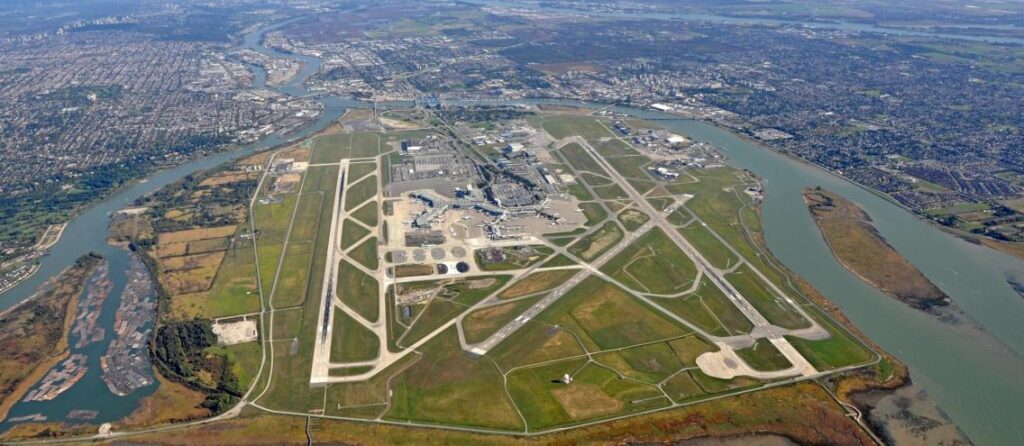
As one of the busiest and most internationally connected airports in North America, Vancouver International Airport (YVR) serves over 26 million passengers annually and processes more than 339,000 tonnes of cargo. YVR accommodates everything from regional turboprops to Boeing 777s, Dreamliners, and even the Airbus A380. It’s also a major node for freight carriers, with nonstop global connectivity.
Yet behind the airport’s world-class performance was a growing challenge: aging concrete infrastructure on high-traffic airfield surfaces. Under the increasing weight of widebody aircraft movements and nonstop operations, pavement panels were showing signs of full-depth cracking, faulting, and corner breaks.
But repairing sections of these runways would be a tall order, requiring the replacement of massive concrete slabs without disrupting 24/7 airfield operations. There was no room for delays, detours, or do-overs.
The solution? A bold pilot project that would test whether precast concrete pavement could deliver rapid, durable results required within tight overnight work windows. In 2019, YVR turned to a proven innovator in precast infrastructure: Fort Miller and its Super-Slab® system.
What followed was a landmark installation: the first use of precast concrete pavement on a Canadian airfield, and the most significant application in North America in nearly two decades.
Super-Slab® Precast Pavement System
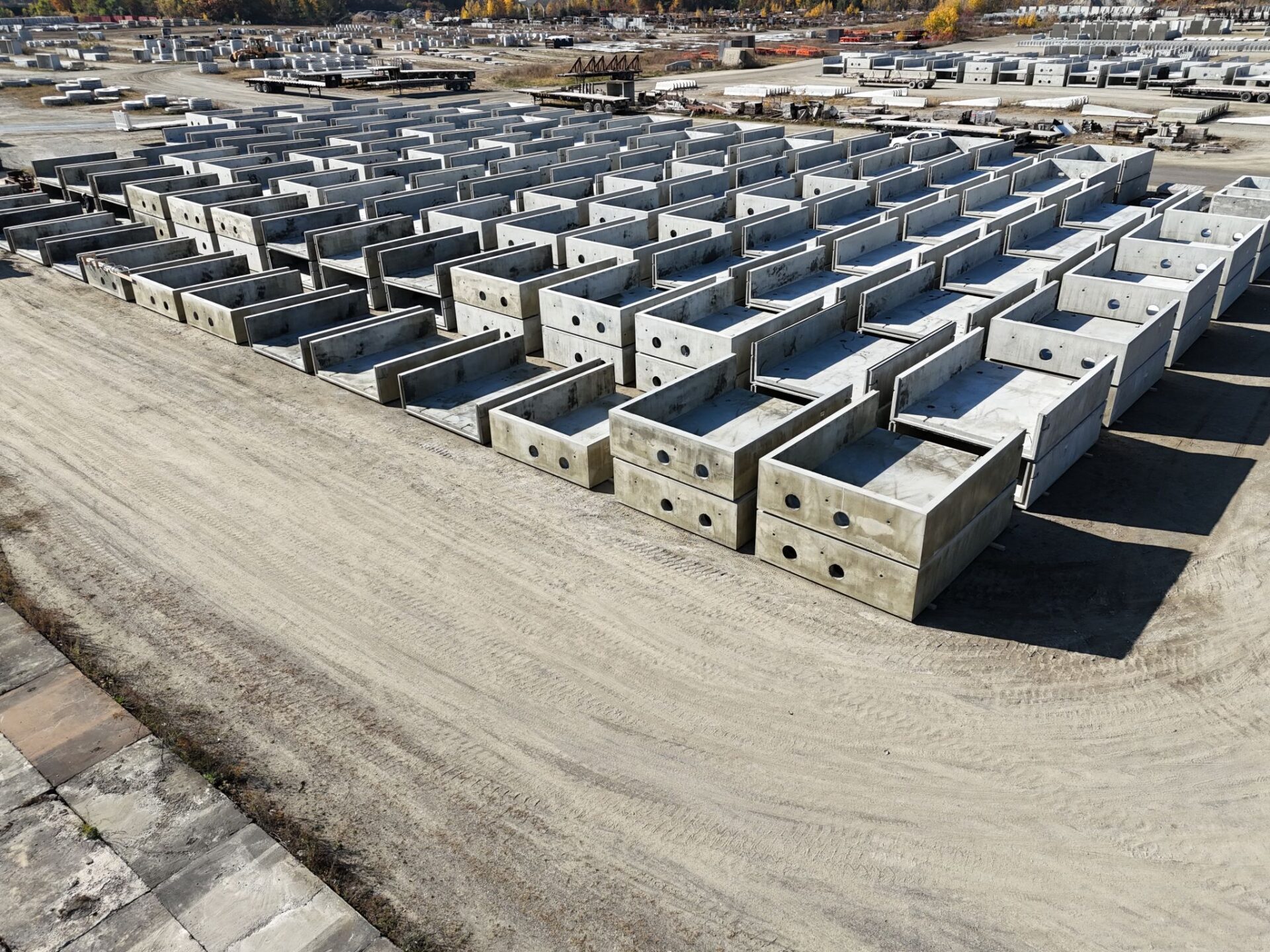
Fort Miller’s Super-Slab® system is a precast concrete solution designed for rapid pavement construction and repairs. Unlike traditional cast-in-place methods, site teams can install Super-Slab’s large precast concrete panels in hours, rather than days. This system has been deployed on over 200+ projects across 15 U.S. states and multiple Canadian provinces, encompassing more than 4.5 million square feet of precast concrete slabs. In fact, Fort Miller Precast has provided more than 80% of all precast pavement installations in North America over the past two decades, making it a leading supplier of precast concrete for infrastructure projects.
The Super-Slab® product exemplifies Fort Miller’s innovative precast concrete products, enabling faster construction, high levels of quality control, and minimal downtime on critical facilities such as airports and highways.
By manufacturing panels in a controlled precast concrete plant environment, the process ensures consistent quality and precise dimensional tolerances. Panels can even be custom-fabricated to match unique project geometries, making Super-Slab® a flexible solution for varied applications.
Innovative Panel Design and Precasting Process
To minimize risk and validate the approach under controlled conditions, YVR selected Taxiway Victor as the testbed for the pilot program. Though not as time-sensitive as an active runway, Taxiway Victor experiences comparable aircraft loads and pavement conditions, making it an ideal proxy for a runway.
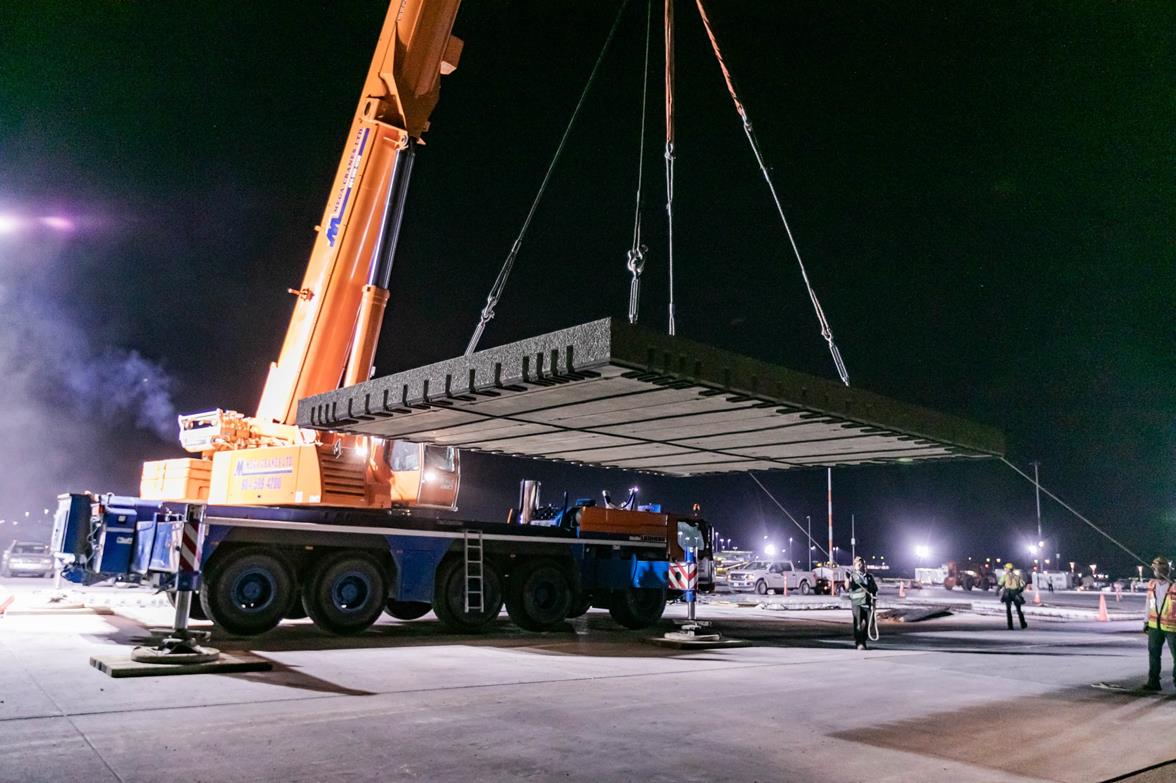
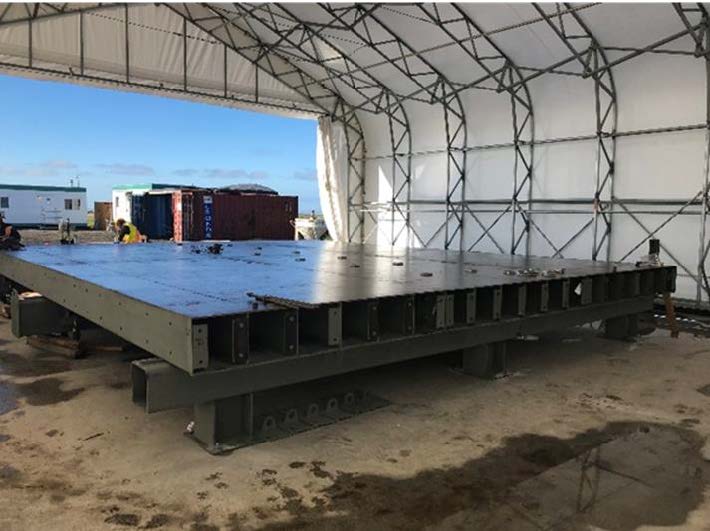
During the pilot, the taxiway surface was replaced with twelve Super-Slab® precast concrete panels, each approximately 6 m by 7.5 m in plan and 360 mm thick. These massive concrete panels, weighing up to 43 metric tons each, were engineered to perform as “ductile” slabs through heavy steel reinforcement. This innovative design meant the precast concrete slabs could carry the required aircraft loads with a thinner profile, avoiding the need to remove and replace underlying base layers (a step that conventional pavement design would have required for equivalent strength). By forgoing extensive excavation, the precast approach saved a significant amount of time during installation.
Each Super-Slab® panel was cast with built-in features to ensure proper load transfer and alignment.
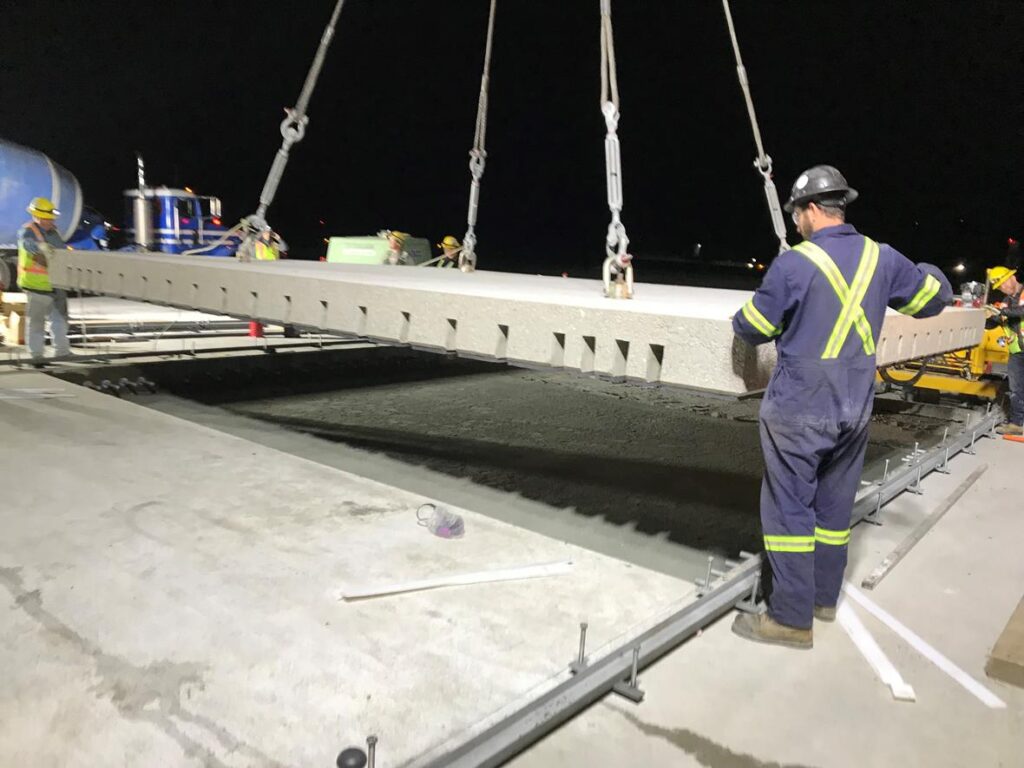
Galvanized steel dowel bars were used to link the panels at their joints, providing load transfer between slabs. Dowel spacing was optimized to distribute stresses effectively. Dovetail-shaped slots were formed on the bottom of each panel’s edges to accommodate the dowels from adjacent panels. This bottom-slot design will keep the top surface of the concrete panels continuous and free of any openings, eliminating the risk of Foreign Object Debris (FOD) on the runway surface.
Five of the precast panels were also cast with embedded airfield light fixture cans to tie into YVR’s taxiway lighting. These required extremely precise positioning during fabrication to ensure proper alignment when installed.
Another challenge was the taxiway geometry: sections of Taxiway Victor are not perfectly flat, so seven of the precast concrete panels had slight warping to match the pavement profile. Achieving this called for a first-of-its-kind warped casting bed, large enough to fabricate airfield-scale panels with the required three-dimensional accuracy.
The Kiewit Sons’ project team set up a temporary precast concrete plant at the airport to ensure any panel size, shape, and curvature could be produced to spec without long-distance hauling. All panels were pre-fitted with neoprene gaskets and grout ports as needed, then cured and finished under controlled conditions before installation.
Rapid Nighttime Installation on Taxiway Victor
Construction was carefully scheduled to take place in three overnight shifts, each roughly 8 hours long, so that daytime airport operations were unaffected. The installation process was a coordinated effort involving multiple crews, with tasks staggered across different panels. Key steps included:
Pre-installation (Night 1): Surveying and layout of the repair area, then saw-cutting the existing pavement into defined slab sections. This prepared the boundaries for panel removal and ensured new panel dimensions would fit exactly.
Panel Removal & Replacement (Night 2): The old concrete slab sections were demolished and removed using heavy equipment. The existing base was inspected and repaired as necessary, followed by the placement and grading of a layer of granular bedding material using adjustable rails. Meanwhile, holes were drilled in the edges of the remaining adjacent pavement to epoxy-anchor new dowel bars that would mate with the precast panels. Next, each precast concrete panel was lifted into position by crane and set onto the prepared surface.
Post-installation (Night 3): Final alignment and leveling of the precast slabs were verified and adjusted as necessary. Crew members then pumped high-strength grout into the dowel slots and beneath the panels to lock the load transfer system and fully bed the panels. Joints between panels were saw-cut if needed to relieve any restraint and sealed, completing the new pavement section.
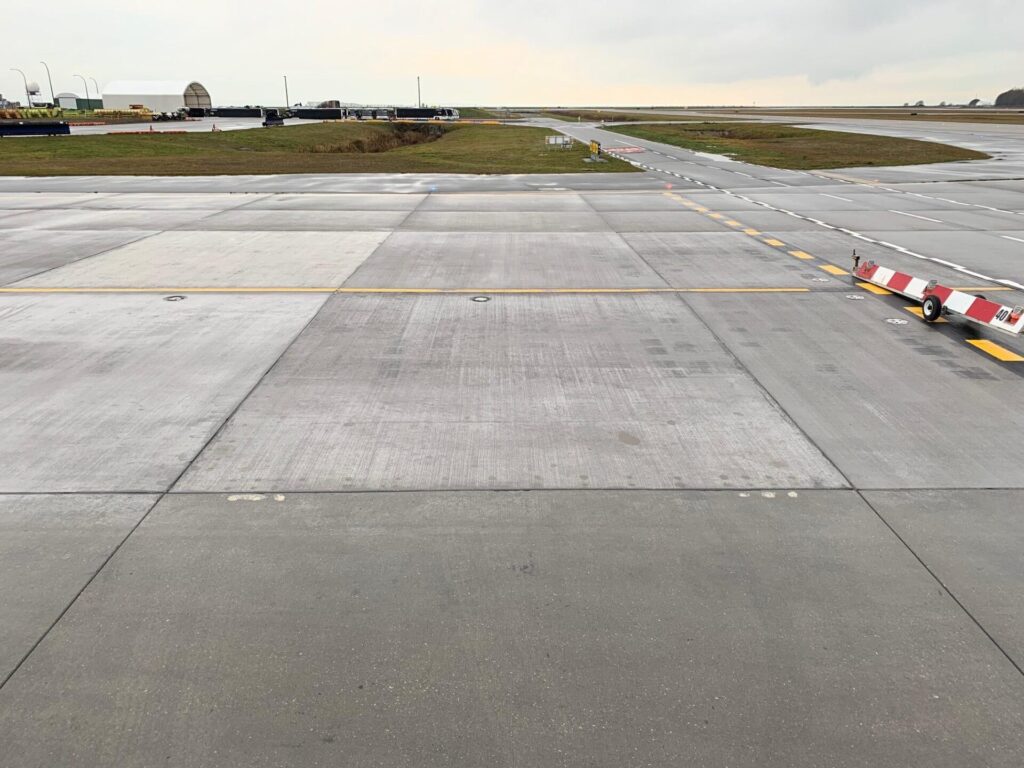
Throughout the process, strict elevation tolerances had to be met at panel joints to guarantee a smooth ride for aircraft. By the end of the third night, all twelve precast panels were grouted in place, and the rehabilitated taxiway slab section was ready for use.
Outcomes and Future Implications
The Taxiway Victor pilot project at YVR was a technical success, confirming that precast concrete pavement can meet the stringent demands of airport infrastructure. This pilot set a precedent as the first-ever use of precast panels for a Canadian airfield, providing valuable lessons to inform larger-scale deployments.
YVR planned to follow up by using precast concrete panels for the upcoming airfield pavement repair of its main north runway, including threshold areas and interior slab replacements. The success at Taxiway Victor has given YVR’s engineers and contractors confidence that future runway repairs can be carried out faster and with less disruption by leveraging precast solutions.
Beyond this single project, the YVR pilot highlights a promising direction for future infrastructure upgrades. For contractors, engineers, and airport authorities, it demonstrates how collaborating with an experienced precast concrete manufacturer and utilizing advanced precast concrete products can significantly reduce downtime on critical projects.
Precast concrete panels offer a viable alternative to fast-track pavement repairs on highways, bridges, and airports alike. The Fort Miller Super-Slab® system, in particular, has demonstrated enhanced construction efficiency and long-term performance through extensive field use.
In summary, the pilot at Vancouver International Airport delivered a proof-of-concept for rapid precast pavement replacement in aviation settings. It resolved YVR’s immediate maintenance challenge on Taxiway Victor and opened the door for broader adoption of precast concrete solutions in infrastructure projects where time is of the essence. This initiative underscores the increasing importance of precast innovation in developing the next generation of resilient and efficient transportation infrastructure.