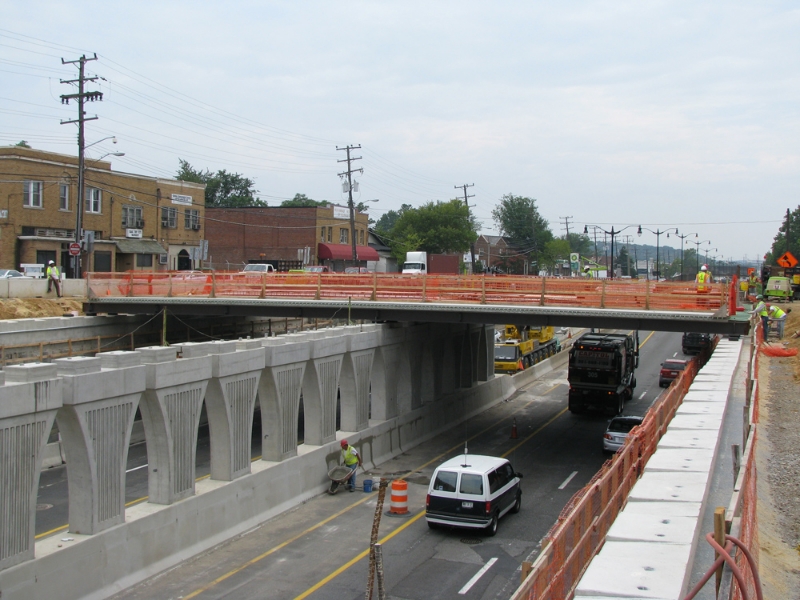
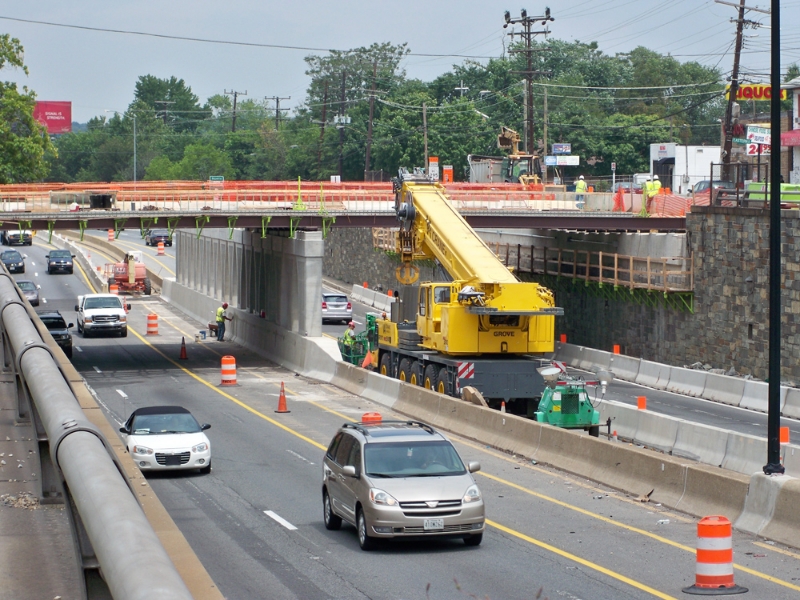
Fort Miller’s precast components enabled a fast, cost-effective bridge replacement along Washington, D.C.’s busy Kenilworth Avenue using ABC techniques.
Eastern Ave. over Kenilworth Ave. Precast Bridge Replacement in Washington, D.C.
Project Stakeholders
- Owner: Washington D.C. Department of Transportation
- Contractor: Fort Myer Construction Corporation
- Engineer of Record: Greenhorne & O’Mara Consulting Engineers
Project Overview
The Eastern Avenue Bridge over Kenilworth Avenue in Washington, D.C., was notorious for its low under-clearance.
The original bridge, built in 1956, had a vertical clearance of only about 14 feet, resulting in frequent collisions as overheight vehicles struck the support girders. These impacts caused repeated damage and traffic jams on the busy Kenilworth Avenue corridor.
As a result, the District Department of Transportation (DDOT) initiated a full bridge replacement project, with the primary goal of increasing the clearance and preventing future bridge strikes. The project would also upgrade the aging span to improve safety for both drivers and pedestrians in this northeast D.C. community.
Scope and Details
The replacement solution utilized innovative accelerated bridge construction (ABC) techniques.
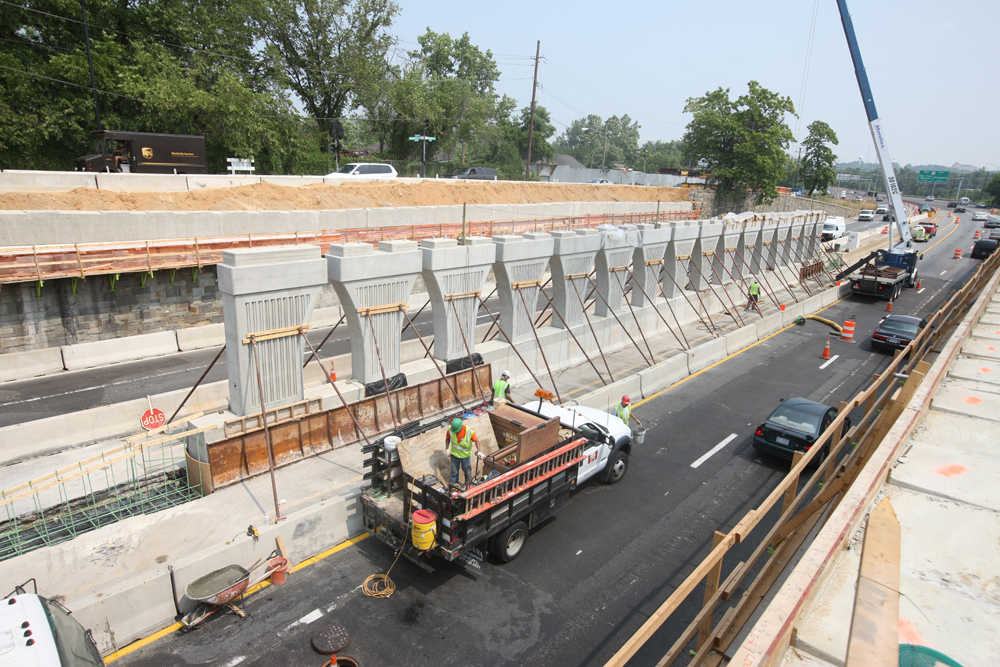
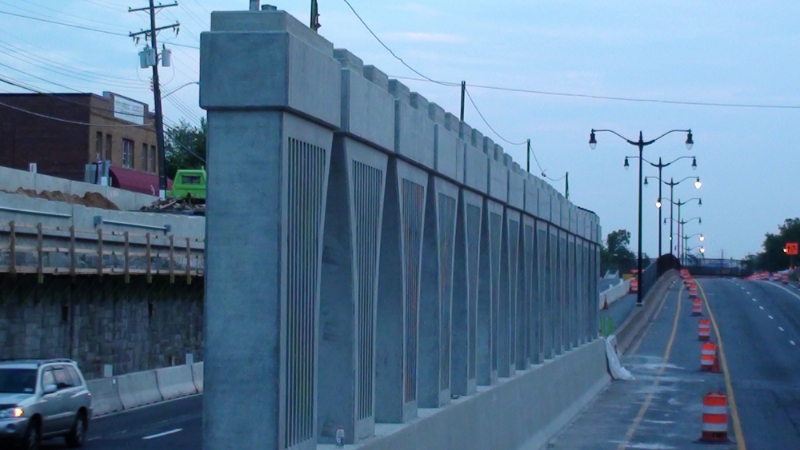
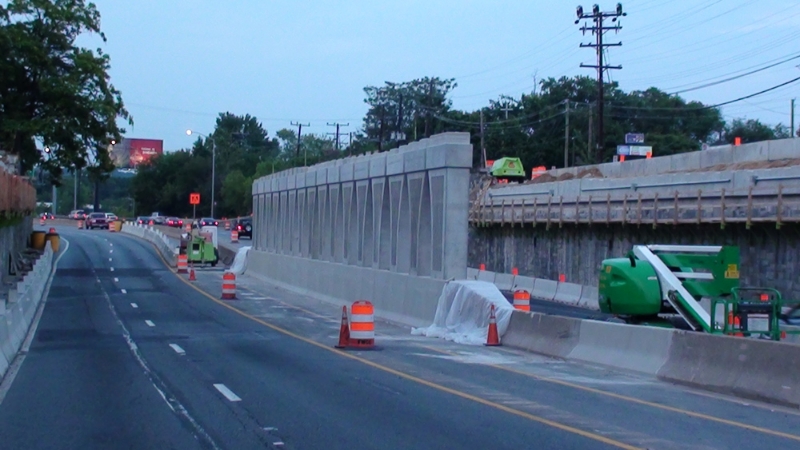
Prefabricated Bridge Units (PBUs) were designed to span the entire crossing from abutment to abutment, with a single precast pier providing mid-span support. This configuration allowed the steel stringer depth to be significantly reduced while still achieving the required span, thereby improving the roadway clearance without raising Eastern Avenue’s profile. In essence, the bridge was converted from a single-span to a two-span structure by adding a centrally located pier, which increased the clearance under the bridge and solved the strike problem.
This design approach effectively met DDOT’s goals, saving substantial time and money by avoiding significant road elevation changes.
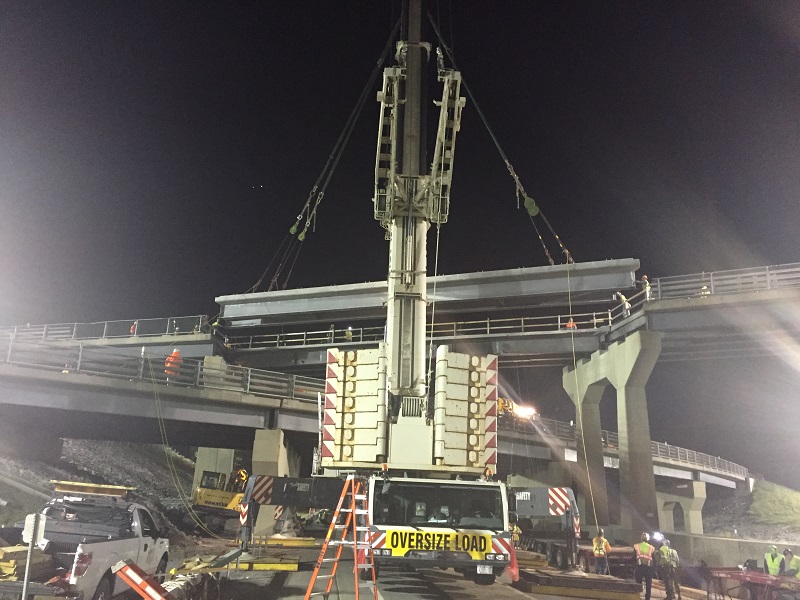
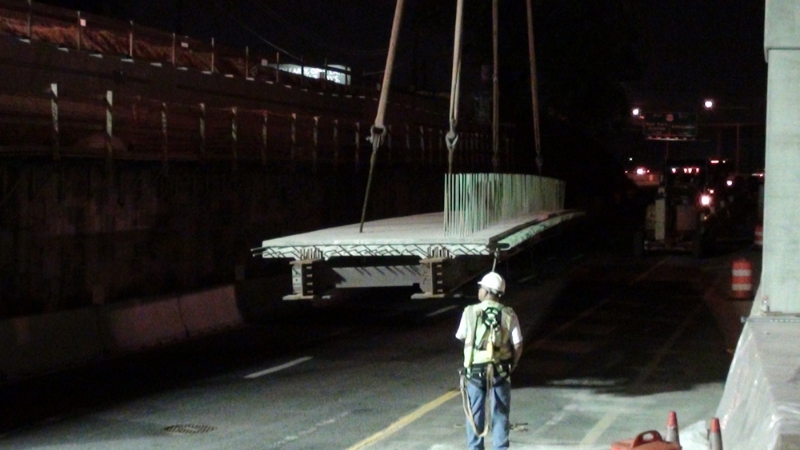
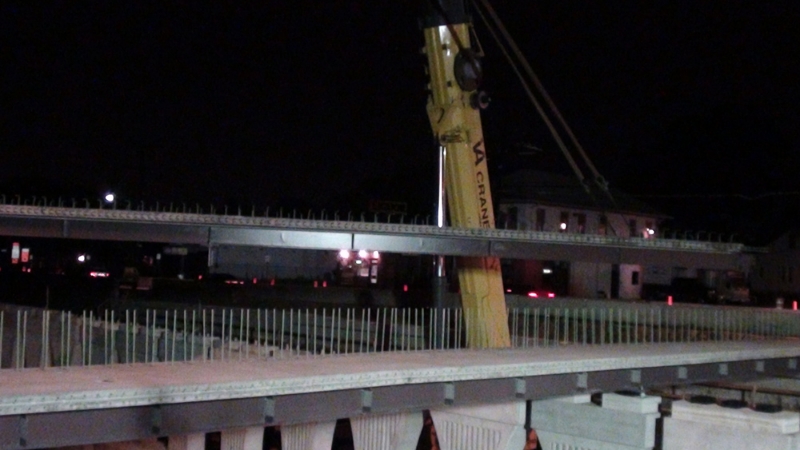
Fort Miller Precast coordinated closely with the general contractor, fabricating 16 precast pier units and 14 deck units off-site and delivering them for installation. All of these precast elements were erected during off-peak periods, primarily on weekends and at night, to minimize disruption to the 6-lane Kenilworth Avenue below.
After the precast units were in place and connected, ancillary features such as planters and curbs were cast in place on the bridge edges for aesthetic purposes and sidewalk safety. The final step involved applying a waterproofing membrane and an asphalt overlay to the deck, providing a smooth driving surface and a durable seal over the lightweight concrete slabs. Despite the extensive use of prefabrication, the bridge’s appearance was carefully crafted to be visually pleasing, blending seamlessly with the urban streetscape.
Impact and Innovation
This project showcased an effective Accelerated Bridge Construction strategy, allowing DDOT to complete a precast bridge replacement in Washington, D.C., quickly and with minimal disruption to the traveling public.
By using precast elements, the construction schedule was dramatically shortened to a single construction season, roughly nine months faster than a conventional build would have taken. Off-site fabrication meant that critical components were ready to be dropped into place, significantly reducing on-site labor and eliminating the need for extensive scaffolding or on-site concrete curing. DDOT also realized cost savings thanks to the accelerated schedule and efficient precast approach.
Public disruption was kept to a minimum throughout the project. Innovative maintenance-of-traffic plans routed vehicles to service roads, allowing Kenilworth Avenue to keep most travel lanes open during weekdays. The heavy lifts and installation of the prefabricated spans were confined to brief, planned closures at night, so commuters experienced almost no delays. This minimized traffic congestion and enhanced safety by avoiding long-term work zones.
The success of the Eastern Avenue Bridge replacement demonstrated how ABC techniques and precast construction can improve project delivery: the increased clearance (now 16 feet) has solved the strike issue and improved safety, and the new bridge was delivered with outstanding quality in a fraction of the normal time.
Fort Miller Precast’s contribution was central to this success. By providing precision-made precast pier units and bridge modules, Fort Miller enabled the contractor to assemble the structure rapidly and with confidence in the fit of each element. This project serves as an exemplary model of innovative design and construction, providing a durable and attractive solution that meets the client’s goals while minimizing its impact on the public.
Resources & Downloads
Access our product resources and downloads for comprehensive information on our offerings.
Featured Bridge Projects
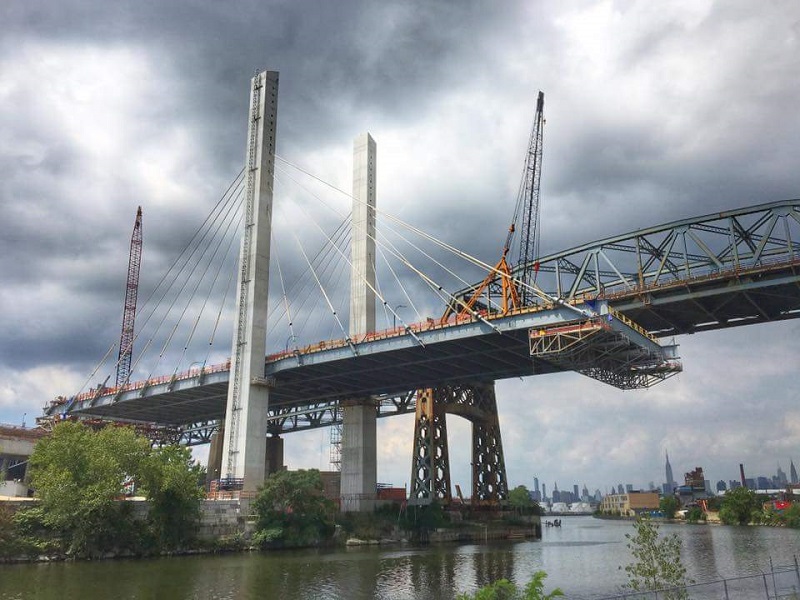
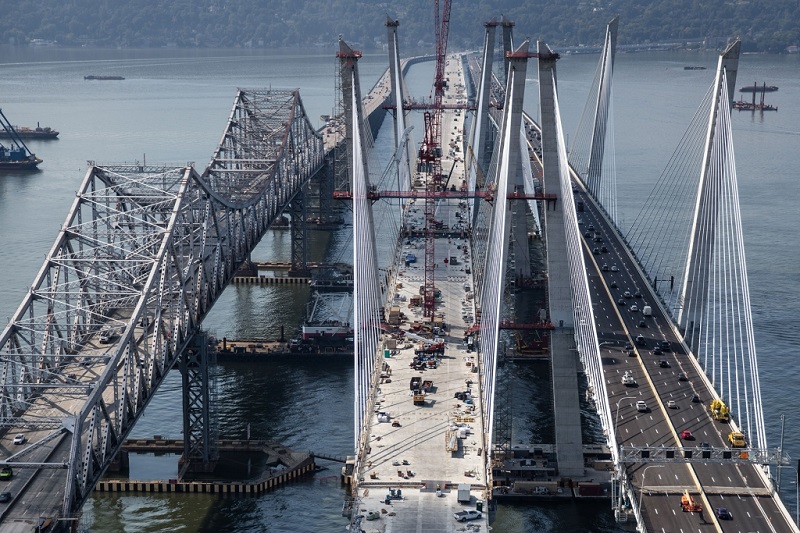
We have participated in some of the most celebrated bridge projects in recent memory, including the Alexander Hamilton Bridge/Highbridge Interchange, the Kosciuszko Bridge over Newtown Creek in Brooklyn-Queens, New York City, and the replacement of the Tappan Zee Bridge over the lower Hudson River.