Precast segmental pedestrian bridge construction allowed Fort Miller to deliver a continuous 150-foot span across the Taconic State Parkway without placing a single pier over active traffic.
Taconic State Parkway | Precast Segmental Pedestrian Bridge
Hudson Valley, NY
Project Details
- Owner: New York State Department of Transportation, Region 8
- Contractor: Granite Halmar Construction Company, Inc.
- Engineer: New York State Department of Transportation
- Scope: (3) 50′ tub girders, custom parapet, high performance concrete
- Completed: 2004
Project Overview
Designed by the NYSDOT, this bridge spans the entire 150’ width of the Taconic State Parkway in Mahopac, NY. It provides pedestrian and bicycle access from one side of the Parkway to the other as a part of a recreational trail system.
From end to end, the Taconic State Parkway follows a consistent architectural identity. Stone-clad structures, naturalistic landscaping, and a mid-century design character define the corridor. To match that established treatment, NYSDOT specified granite stone cladding on both the bridge and its abutments. Fort Miller also designed a custom parapet for the area, ensuring the structure integrates visually with the surrounding corridor.
Scope and Details
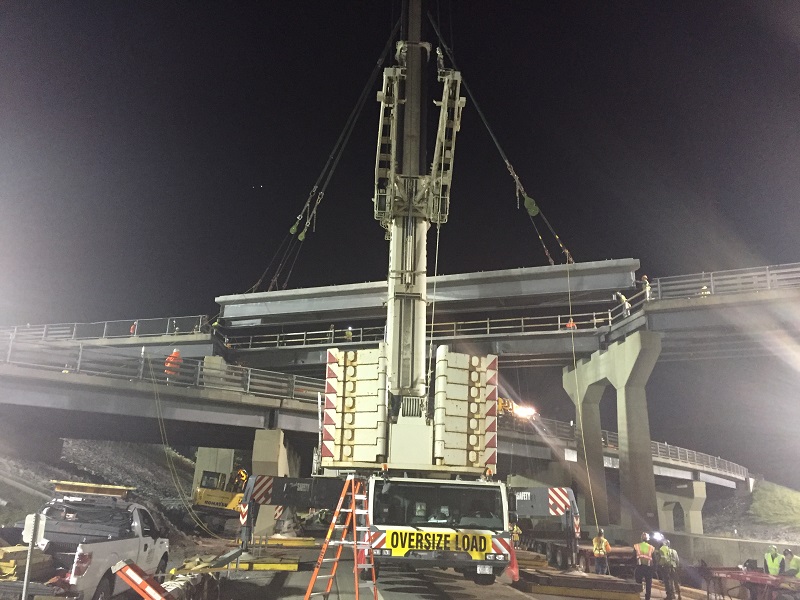
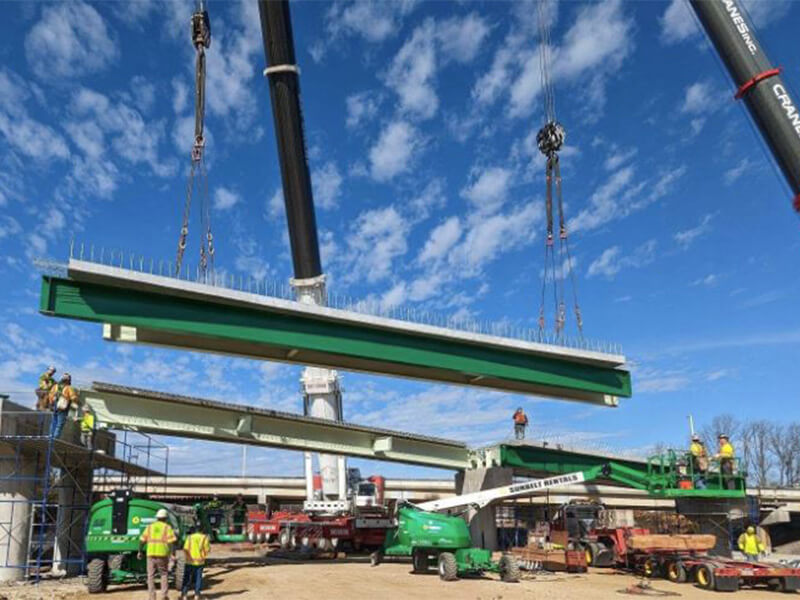
For this project, Fort Miller fabricated three (3) 50-foot precast tub girder segments, each weighing 113 tons. Tub girders, a U-shaped precast bridge form, offer an efficient combination of structural depth and enclosed geometry. This makes them well-suited to long-span applications.
First, the erection crew set each segment on temporary towers. Those towers carried the load during assembly without placing any permanent supports over the active Parkway below.
Then, closure pours joined the three segments at their third points. Afterward, the crew post-tensioned the full 150-foot span in the longitudinal direction, locking the three units into a single continuous superstructure. This approach eliminated the need for intermediate piers, which is a critical requirement for a bridge crossing a live, high-speed roadway.
In addition, NYSDOT specified the project used High Performance Concrete (HPC). Therefore, the precast segments were made with compressive strengths exceeding 10,000 psi, meeting the agency’s durability standards for long-service infrastructure. Fort Miller’s bridge product line routinely incorporates HPC on projects where structural performance and service life are primary design drivers.
Impact and Innovation
Spanning an active parkway without intermediate piers is a significant structural constraint – one the tub girder approach resolved directly. To do so, Fort Miller created a fully continuous 150-foot span from factory-manufactured components. This avoided both the disruption and complexity of cast-in-place construction over a live roadway.
Furthermore, manufacturing the segments off-site in Fort Miller’s controlled plant environment also ensured dimensional consistency and concrete quality before the units arrived on site. This is one of the core advantages of precast concrete bridge construction: the factory builds structural performance directly into each unit. Ultimately, this not only reduces variability but also accelerates on-site erection sequences.
The custom parapet and granite stone cladding requirement added a layer of complexity that Fort Miller’s manufacturing capabilities handled with precision. Now, the finished structure meets the structural demands of a 150-foot no-pier span while also satisfying the strict visual standards of a historically sensitive parkway corridor.
Together, these outcomes demonstrate what precast concrete fabrication can achieve on a single project.
Resources & Downloads
Access our product resources and downloads for comprehensive information on our offerings.
Featured Bridge Projects
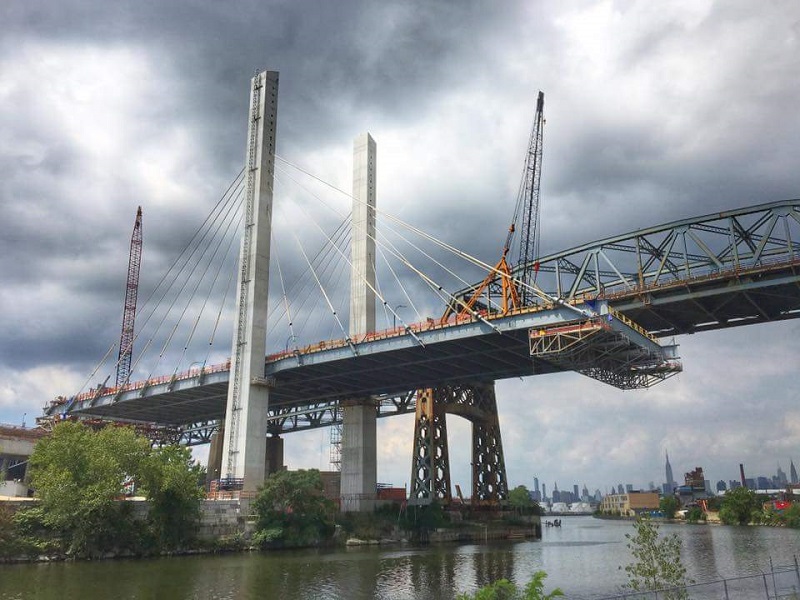
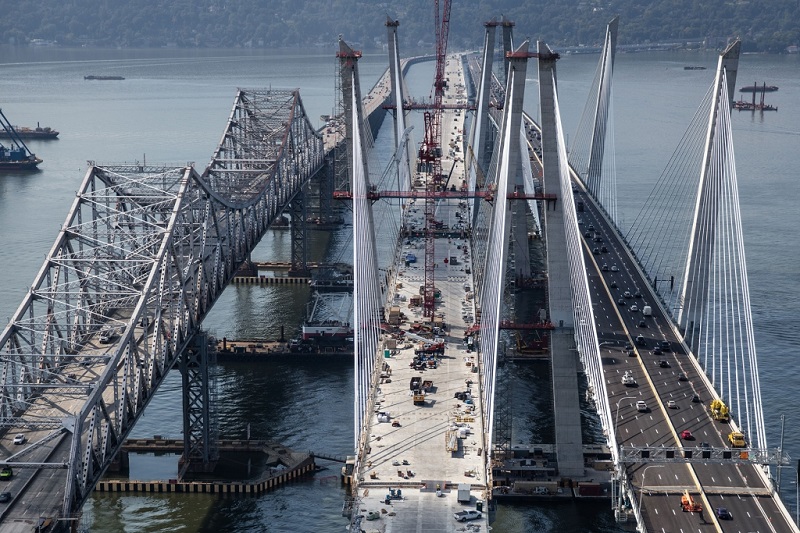
We have participated in some of the most celebrated bridge projects in recent memory, including the Alexander Hamilton Bridge/Highbridge Interchange, the Kosciuszko Bridge over Newtown Creek in Brooklyn-Queens, New York City, and the replacement of the Tappan Zee Bridge over the lower Hudson River.